
Independent Review: This set was personally purchased out of pocket. We maintain a strict policy of editorial integrity across all content, ensuring our evaluations remain completely honest and unbiased for our readers.
Cyberpunk was the theme that led me to Lumibricks in the first place. I had been looking for inspiration to build my own cyberpunk structures when I found the Lumibricks Cyberpunk Apartment. That set introduced me not only to Lumibricks, but to the wider world of alternative-brick companies making genuinely high-quality original designs.
If you have read that review or my Lumibricks K’s Spinner review, you will already know that I have a fairly serious weakness for this theme. The Neon Tech Tower is my fourth Lumibricks Cyberpunk build, so it was arriving with both high expectations and some useful competition.
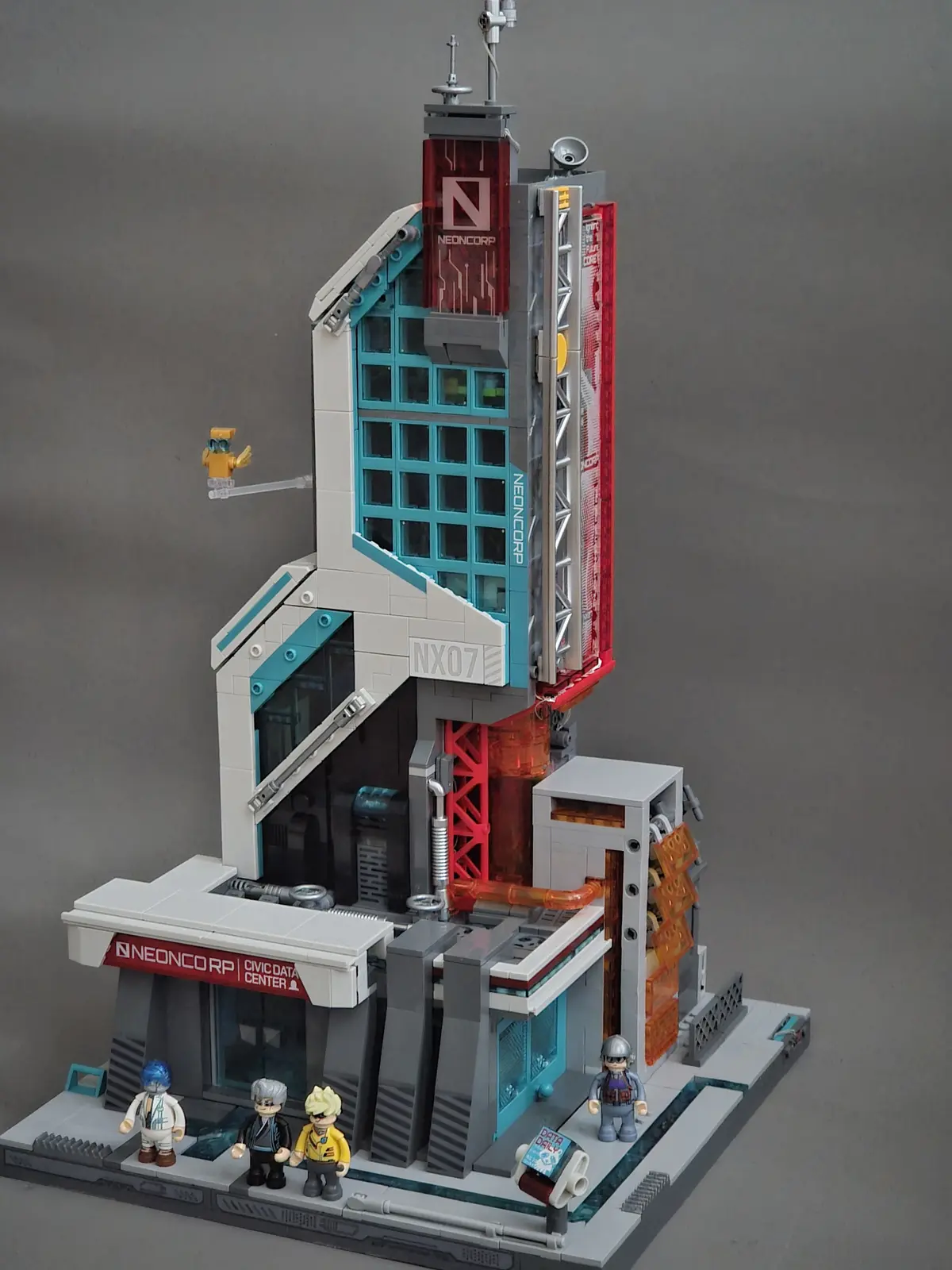
From the box art and official photos, this looked as though it would hit exactly the right cyberpunk nerve. Having now built it, the quality feels like a significant step up from the earlier wave. The design is more mature, the structure is sturdier, and the lighting is woven into the architecture.
Quick Summary
| Pros | Cons |
|---|---|
| Excellent cyberpunk atmosphere with a more mature design than the earlier wave | The apparent fibre-optic cable was too thick for the required holes, and the instructions do not explain whether its outer film should be removed |
| Superb lighting with 27 light points, a flowing strip and layered power-core effects | |
| Sturdy MILS-style base with integrated wireless power connections |
The Neon Tech Tower is a challenging but extremely rewarding cyberpunk build. The detailed four-floor interior, sturdy base and excellent integrated lighting make it one of Lumibricks’ strongest Cyberpunk buildings so far. The wiring demands patience, and the fibre-optic cable fit needs addressing, but that issue takes little away from the finished display.
Lumibricks Neon Tech Tower 17011 Set Information
| Set name | Neon Tech Tower |
|---|---|
| Set number | 17011 |
| Theme | Cyberpunk Neoncity |
| Piece count | 2,227 |
| Finished size | Approximately 26 x 26 x 47 cm |
| Lighting | 27 LED light points and seven light strips |
| Decorated parts | 40 printed parts, two acrylic light panels and nine silver-coated elements |
| Characters | Five named characters, plus a humanoid robot |
| Build | 13 numbered bags and two instruction manuals |
| Suggested build time | Approximately 16 hours |
| Power | USB Type-C cable or battery box using three AA batteries |
| Official price | $149.99 USD at the time of writing |
Building the Neon Tech Tower
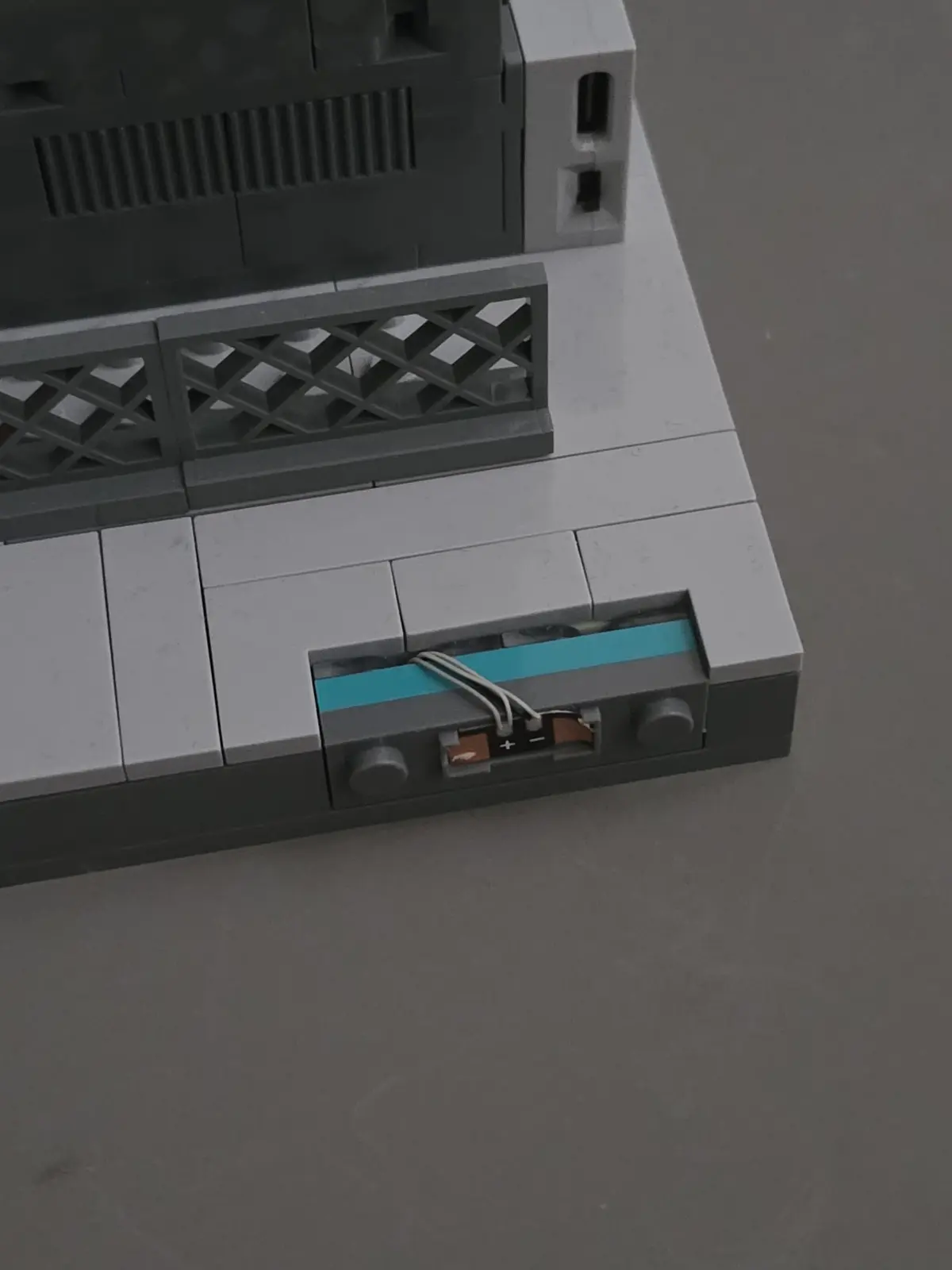
As with the other large Lumibricks Cyberpunk sets, the build begins with the base. These models use what is effectively a MILS-style foundation, with a thick, reinforced structure rather than a simple baseplate. That matters here because the completed tower is 47 cm tall and carries a lot of weight above a relatively compact footprint.
The sturdy base is only part of the story. It also contains the wireless power connections and the first stage of the lighting system. For me, this is exactly where the connectors should be. As I explained when working through Lumibricks’ wireless power solution, placing them inside the Cyberpunk range’s MILS-style base keeps them hidden, consistent and out of the way. The finished model can pass power to other sets without a loose cable running between buildings.
Lumibricks has also added wireless connections to its later Town Life modulars. However, those buildings do not use a MILS-style base, so the connections sit above base level. They work, but I do not think the result is as neat or as well integrated as it is here. Street Fusion does not have wireless connections at all, which is a shame. Of the different approaches I have tried, the Cyberpunk range still handles the system best.
The base itself is quite involved. There is a lot happening underneath the visible floor, and the lighting begins early. Transparent blue elements create a cool glow through the lower structure, establishing the neon effect before the tower has even started to rise.
A Build That Needs Your Attention
One thing became clear quite quickly: this set needs your full attention. I usually like to have something playing on a tablet while I build, but I kept making mistakes, especially once I reached the main tower structure. I turned the tablet off, paid proper attention, and everything went much more smoothly.
This is my fourth Lumibricks Cyberpunk set and that has been a recurring feature of the theme. These are more advanced builds, with dense structures, small greebling and lighting cables that need to be positioned correctly before the next layer closes them in. I personally enjoy a more challenging build, but this is not one to assemble on autopilot.
The upper tower is the trickiest part. Lumibricks dedicates several pages to cable routing, and those pages are there for a reason. Slow down, check the wire positions from more than one angle and test the lights at each major stage. Undoing the tower later would not be a relaxing way to spend an evening.
Design and Cyberpunk Atmosphere
The finished tower uses cold grey and dark bluish grey as its foundation, then layers in red, cyan, orange and transparent elements. There is a lot of greebling, exposed structure and coloured tubing, but it feels controlled. Earlier Cyberpunk sets could sometimes lean towards a more cartoon-like look. This feels more architectural and more believable.
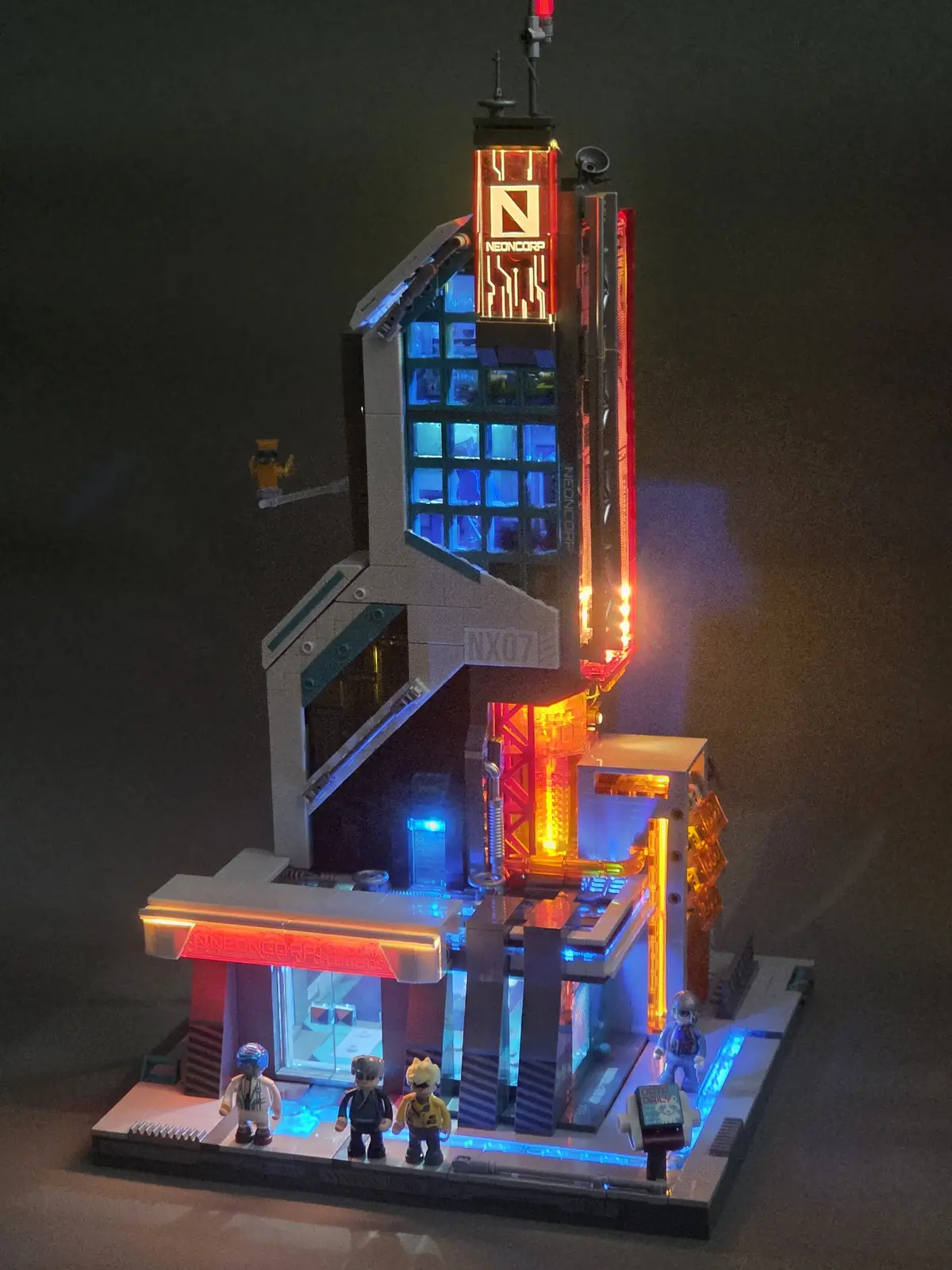
The transparent flexible cable appears to be fibre optic, which would explain how it carries the light so effectively through the structure. Coloured transparent elements are positioned behind, around and within the structure, with some sliding down through the holes in circular pieces. Together, they create long, clean lines of neon once the lights are switched on. The red, orange and yellow power core adds a warm glow to the centre of the model, while the cooler blue areas stop the whole building becoming one wall of red light.
Nine silver-coated elements add small metallic highlights without making the tower look too shiny. The result is busy, industrial and very recognisably cyberpunk, but still coherent enough to read as one building rather than a pile of interesting parts.
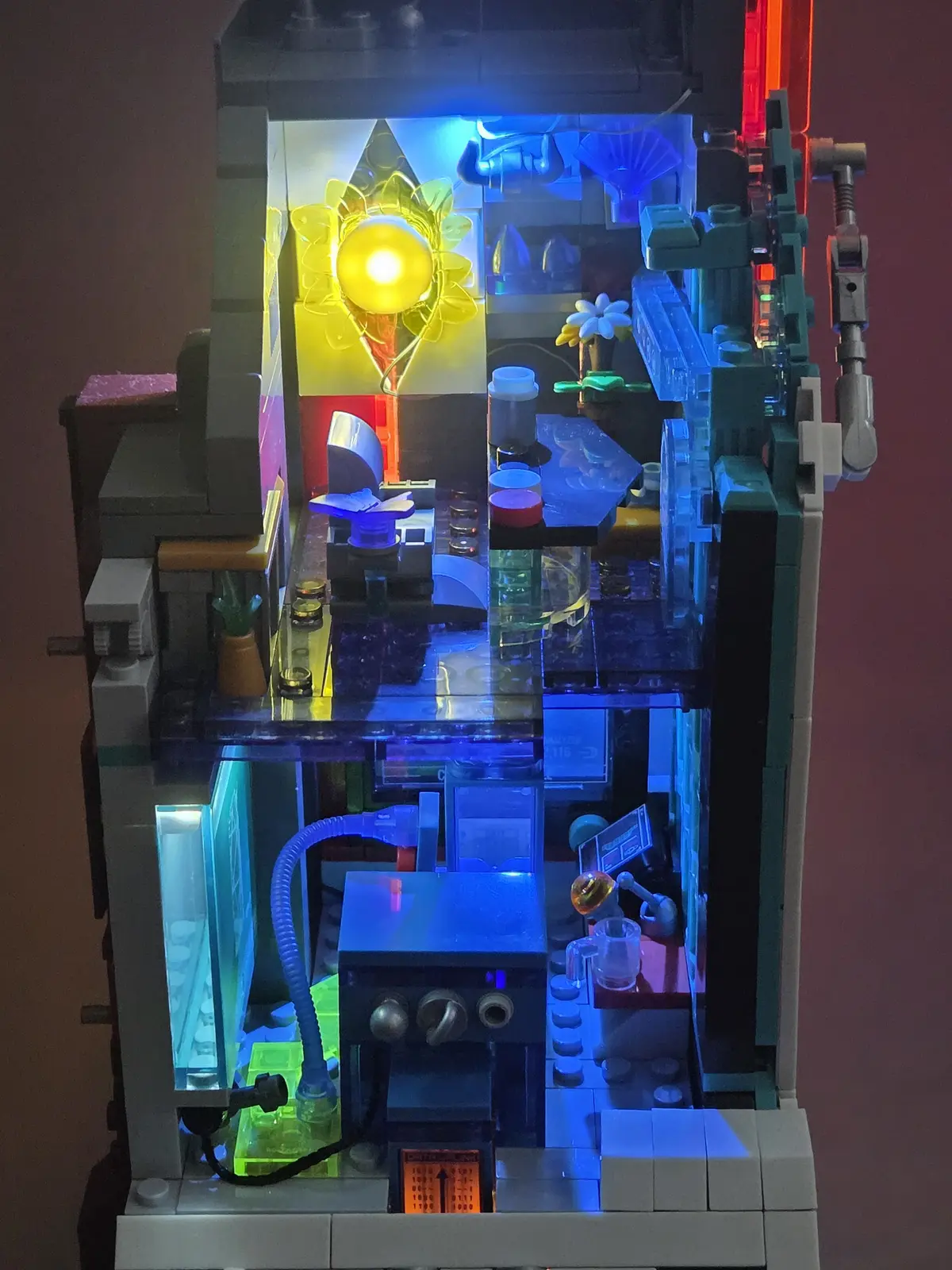
A Four-Floor Data Centre
The Neon Tech Tower differs from the residential, retail and police buildings elsewhere in the range. This is Neoncorp’s civic data centre, where citizen identities, behaviour, emotions and even memories are collected and analysed. I am sure all of that information will be used responsibly. Nothing remotely Big Brother about it.
The concept gives the interior a clear purpose. Instead of filling each floor with generic screens, Lumibricks has divided the building into four stages of the same surveillance system.
Information Collection Hall
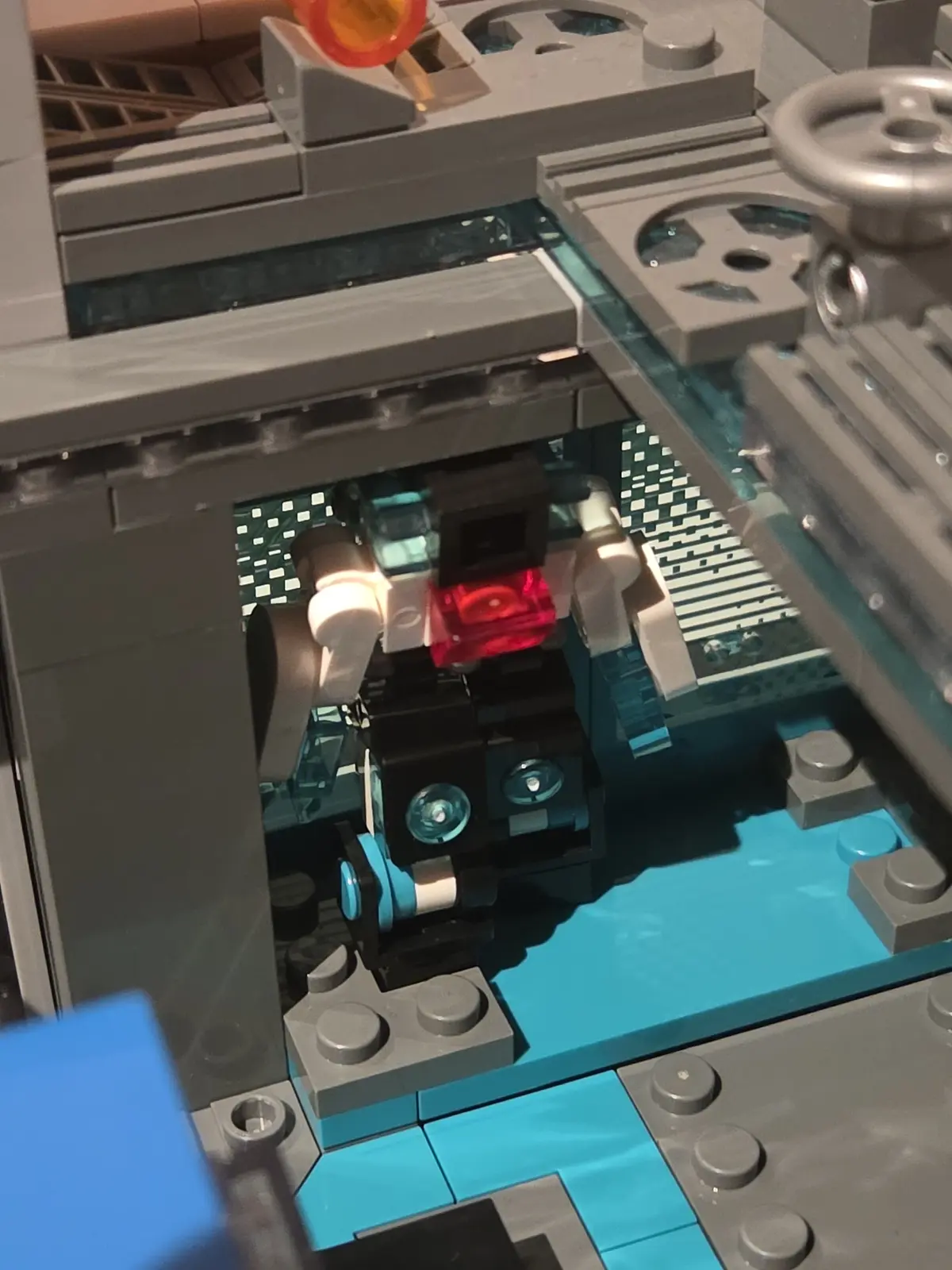
The ground floor is where the data enters the building. A glowing blue information column, terminals and wall displays make it feel like a public-facing access point hiding a much larger system behind it. There is also a humanoid robot with its own charging station, which can be placed inside or displayed outside the entrance.
Data Storage Centre
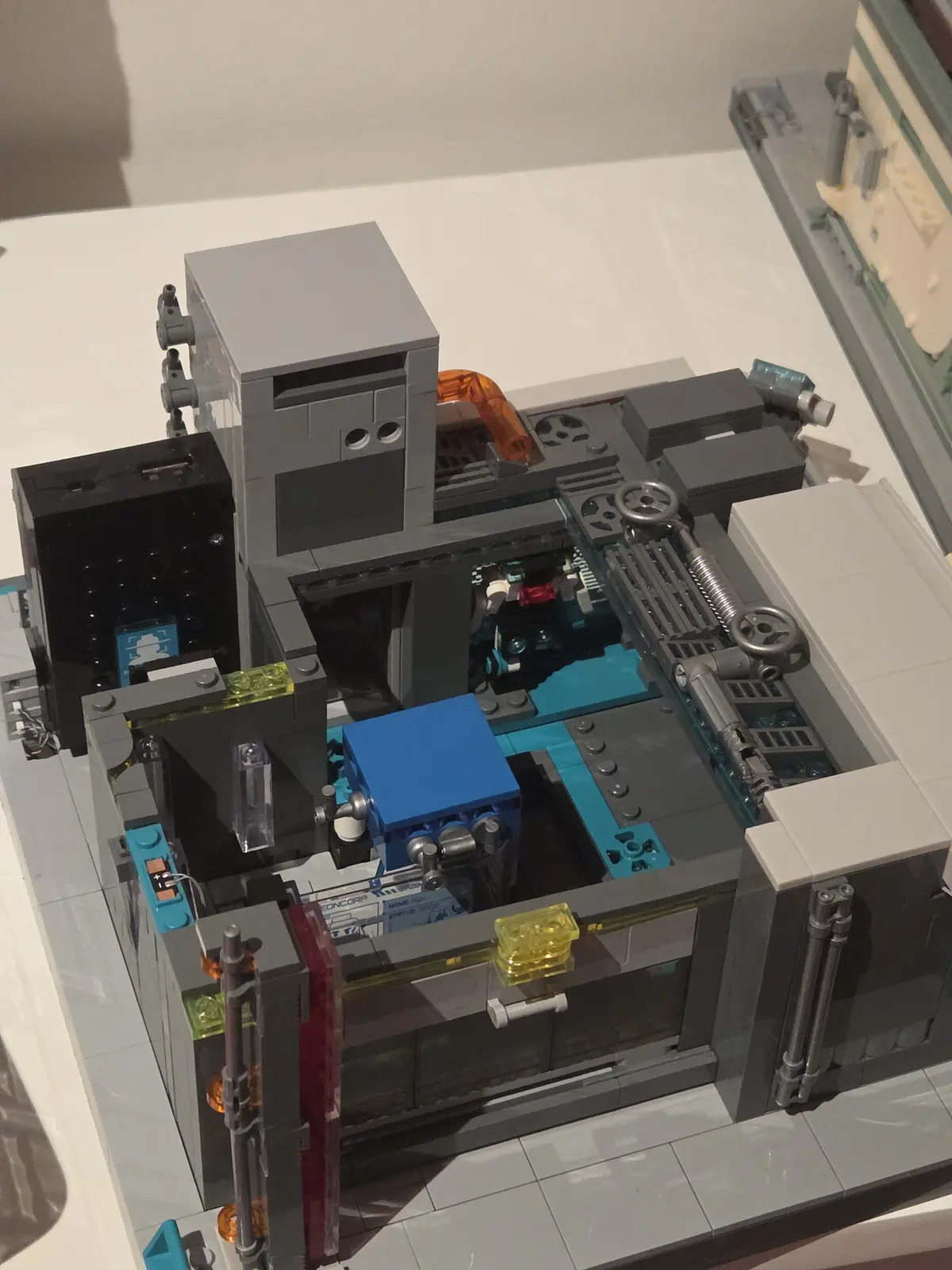
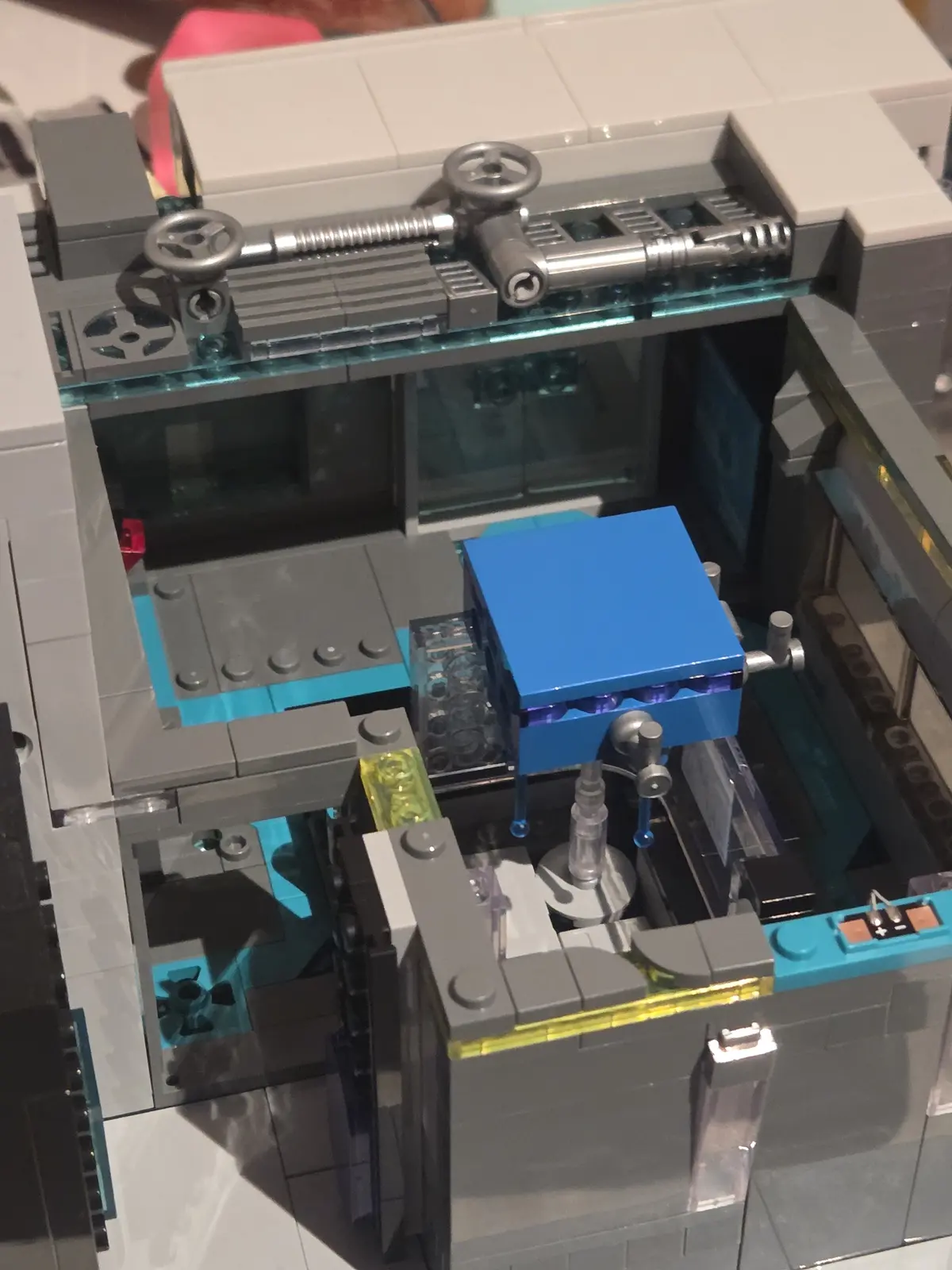
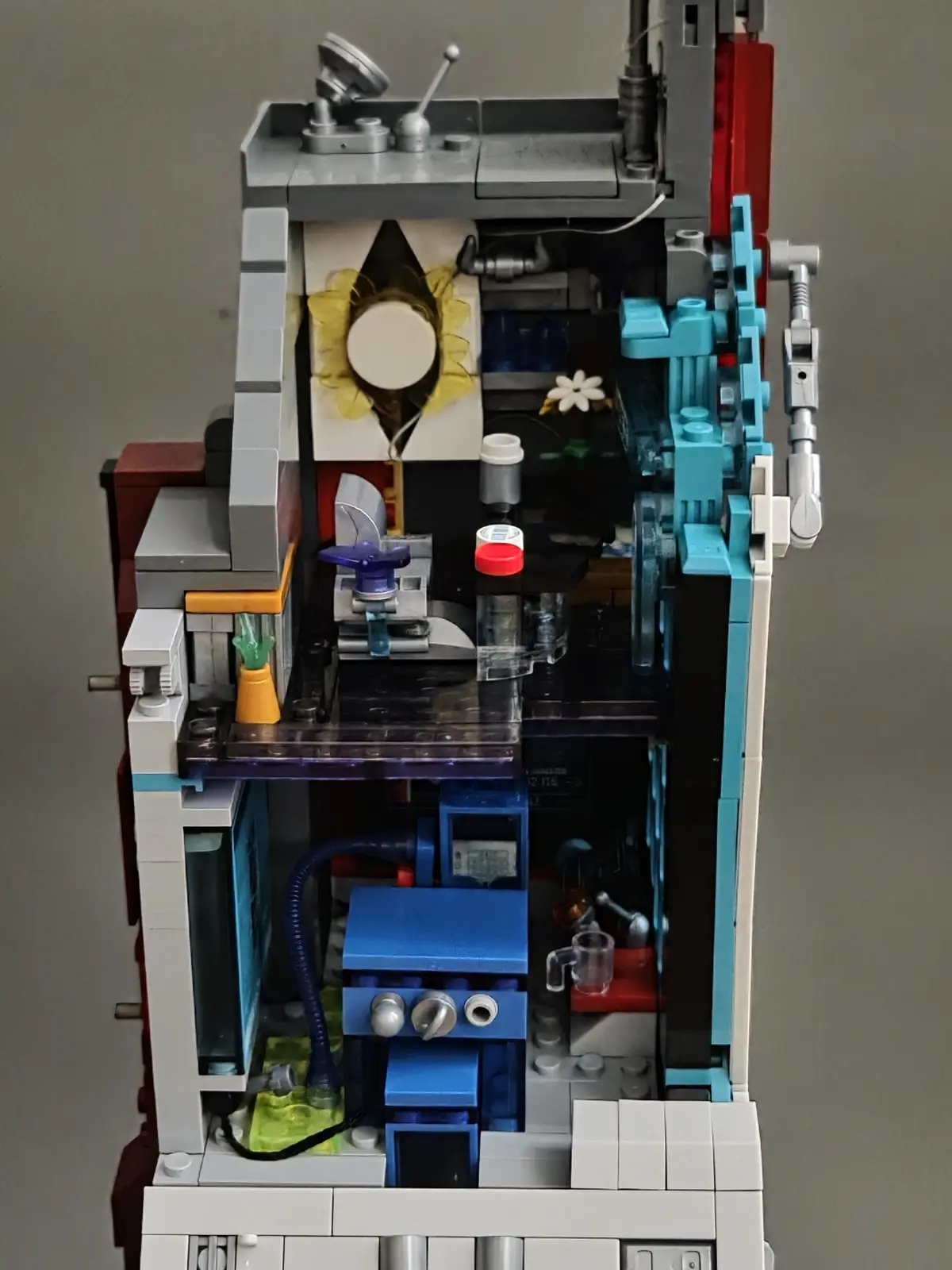
The second level houses the removable data-storage core. It slides into the tower as a complete module, with banks of equipment, hoses and warm orange lighting suggesting that the information collected below is being physically stored and processed. This section also contains some of the strongest machinery detail in the build.
Data Analysis Lab
Above that is the analysis lab, another removable section with screens, a platform for a figure and printed displays covering behavioural data, mind maps and DNA. One transparent green chamber looks as though it is storing or scanning biological information. Exactly what Neoncorp is doing with it is left open, which makes the interior more interesting.
CEO Office
The CEO office sits at the top as a separate removable module. It is more restrained than the machinery below, but still contains the screens and corporate detail needed to tie it into the rest of the building. The person making the city-wide decisions is literally placed above everyone else. Subtle.
Access and Modular Design
A detailed interior is not much use if it disappears inside the tower, so the access features matter. There are no hinged doors or walls. Instead, complete exterior panels lift away from the model. That approach works very well here because it opens the tower fully rather than leaving a hinged section in the way.
Each room can also be removed as its own module. As with most Lumibricks sets, wireless contacts carry power into the removable sections, so there are no cables tethering the rooms to the main structure. It gives you full access to the data-storage core, analysis lab and CEO office for viewing, figure placement and photography.
The tower also separates from its base. Removing the lower section reduces the height from roughly 47 cm to about 34 cm, which could make the difference between fitting into a display cabinet and having to reorganise the entire shelf.
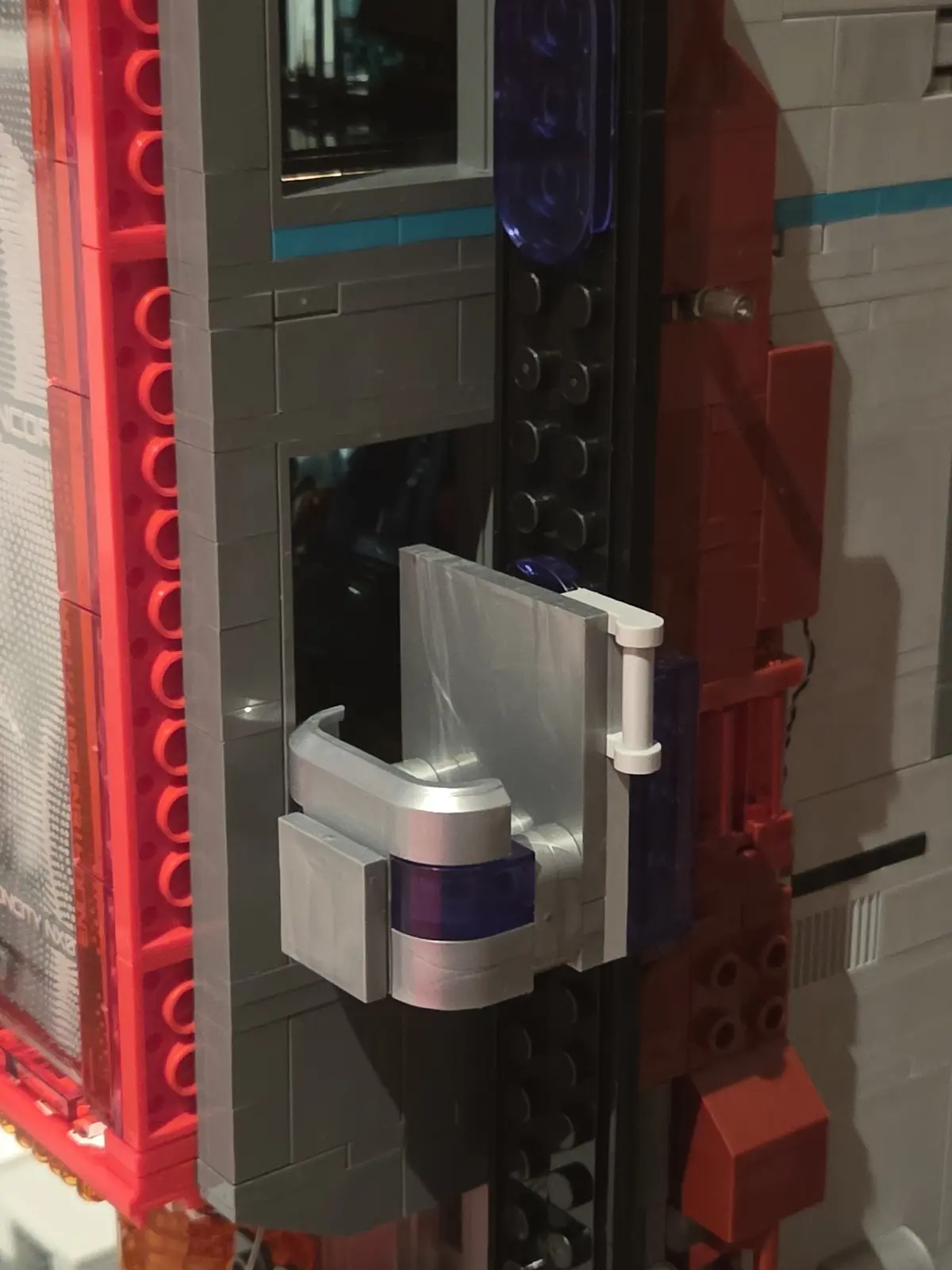
A Simple Manual Elevator
The tower includes a hand-operated elevator connecting its levels. I am glad Lumibricks kept this mechanism manual. The company has tried elevators in other sets and they have not always worked as neatly as intended. Here, you simply lift the elevator by hand and secure it at each floor with a small sliding lock.
It is not an elaborate mechanism, but that is exactly why it works. It is easy to control, holds the elevator where you want it and does not add unnecessary complexity to an already involved build.
A detachable bridge is included for connecting the tower to the Neon Tech Station 17010. A decorative part from the tower becomes the elevated walkway, while contacts in the bases pass power between the buildings. Up to four compatible scene models can share the linked power system.
Lighting: Where the Set Comes Alive
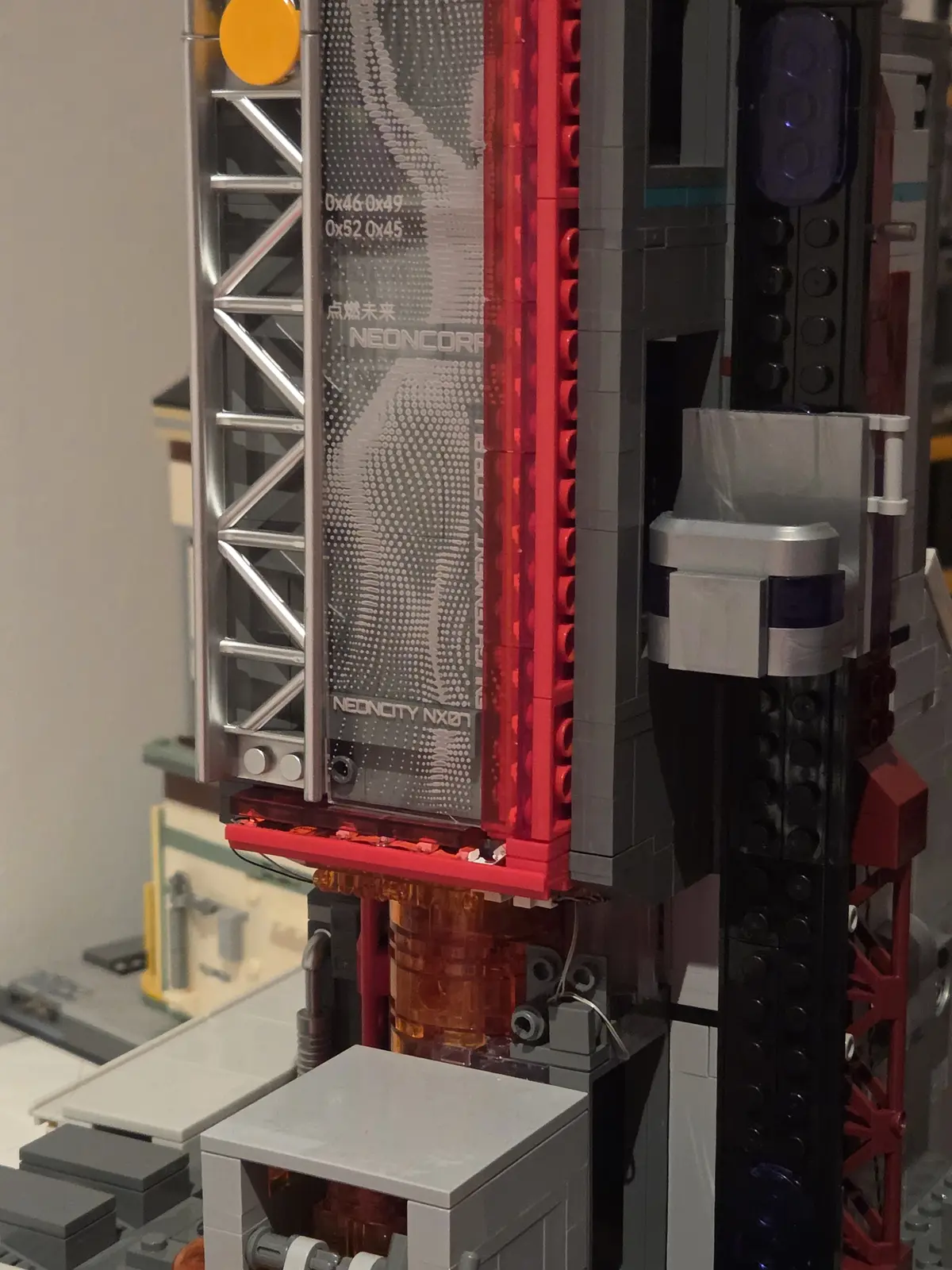
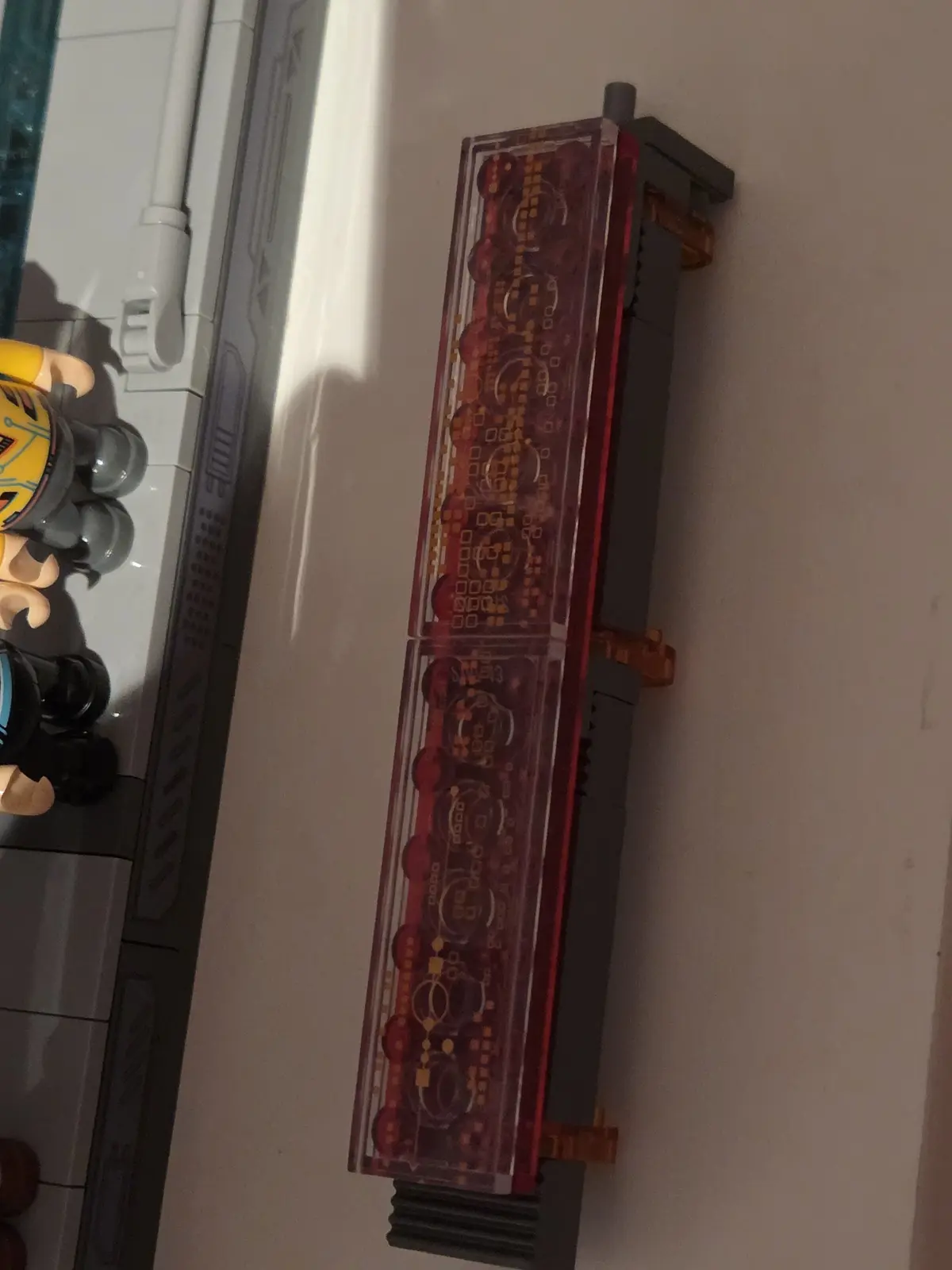
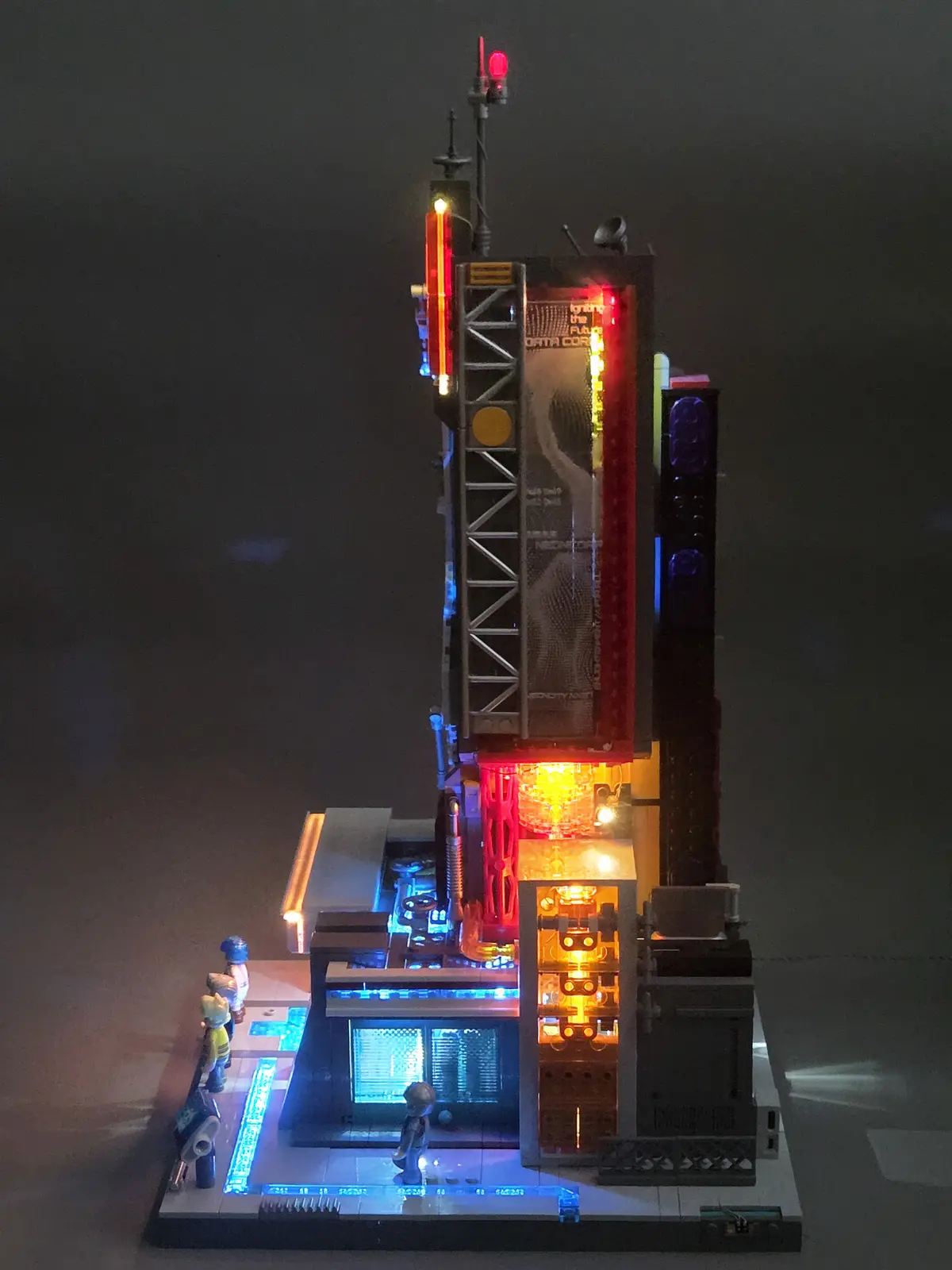
Lighting is the feature a cyberpunk set has to get right, and this is where the Neon Tech Tower delivers. The set contains 27 light points and seven strips, including a flowing vertical strip running up the side of the building. It creates the impression of data moving through the tower rather than simply flashing for attention.
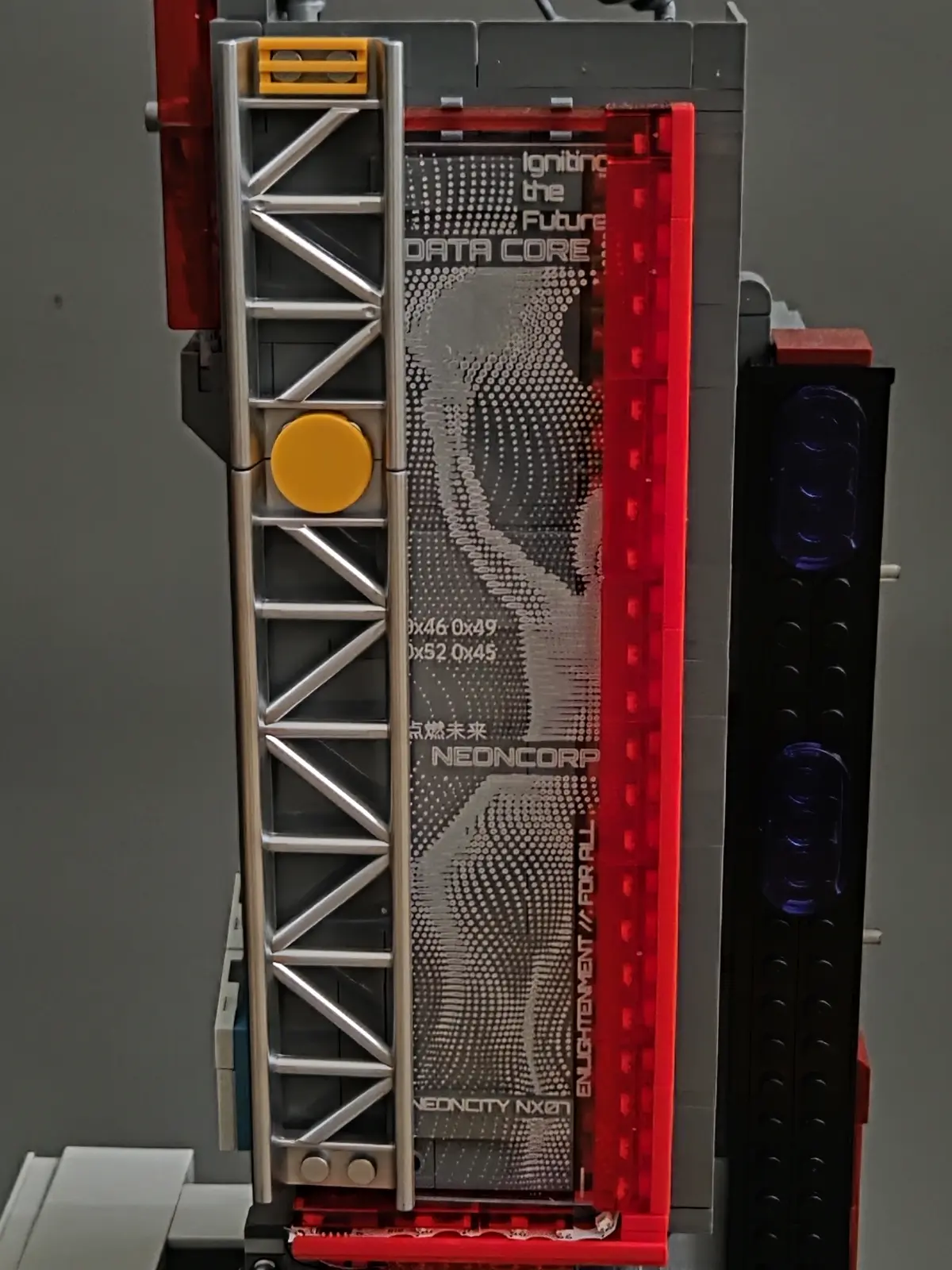
Going into the build, I wondered whether that moving strip might become distracting. Then the large acrylic side panel and red structural sections were added around it, and the whole effect clicked into place. The panel diffuses and frames the movement rather than leaving a bare strip of LEDs visible.
The central power core is even better. Most of its red, orange and yellow lighting creates a rich, steady glow, while selected sections pulse to give the machinery a sense of life. The side of the tower adds a separate pulsing effect followed by lights travelling upwards. Cooler lighting fills the lower data areas, while a second acrylic panel illuminates the NEONCITY logo at the top. Each part has its own role, so the tower does not rely on brightness alone.
Lumibricks includes both an AA battery box and a USB Type-C cable. The supplied cable runs from USB-A to USB-C, which makes the set easy to power from a plug, USB hub or external power bank. The battery box is hidden around the back behind a wall, while the wireless contacts sit neatly inside the base. That separation keeps both parts accessible without spoiling the display.
Printed Parts and Acrylic Panels
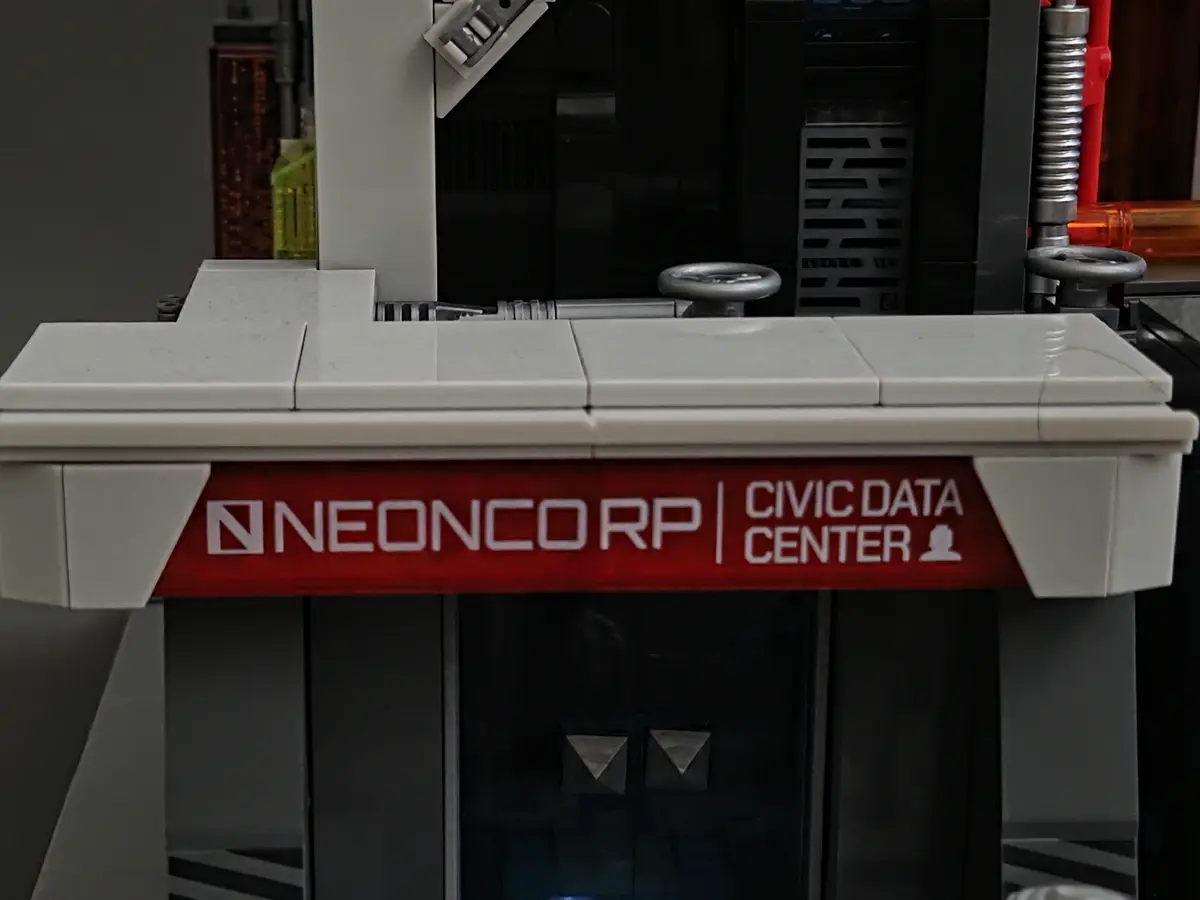
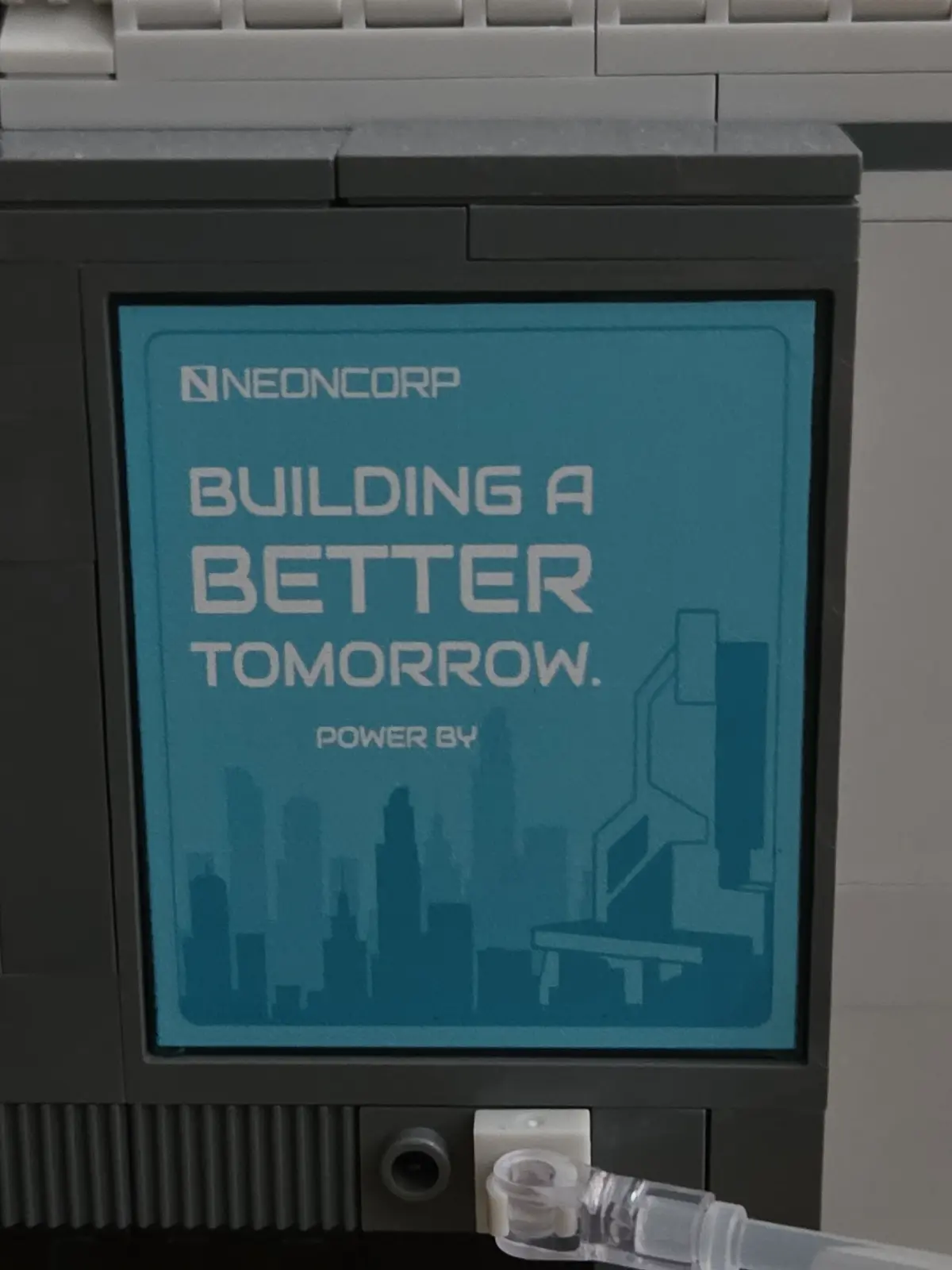
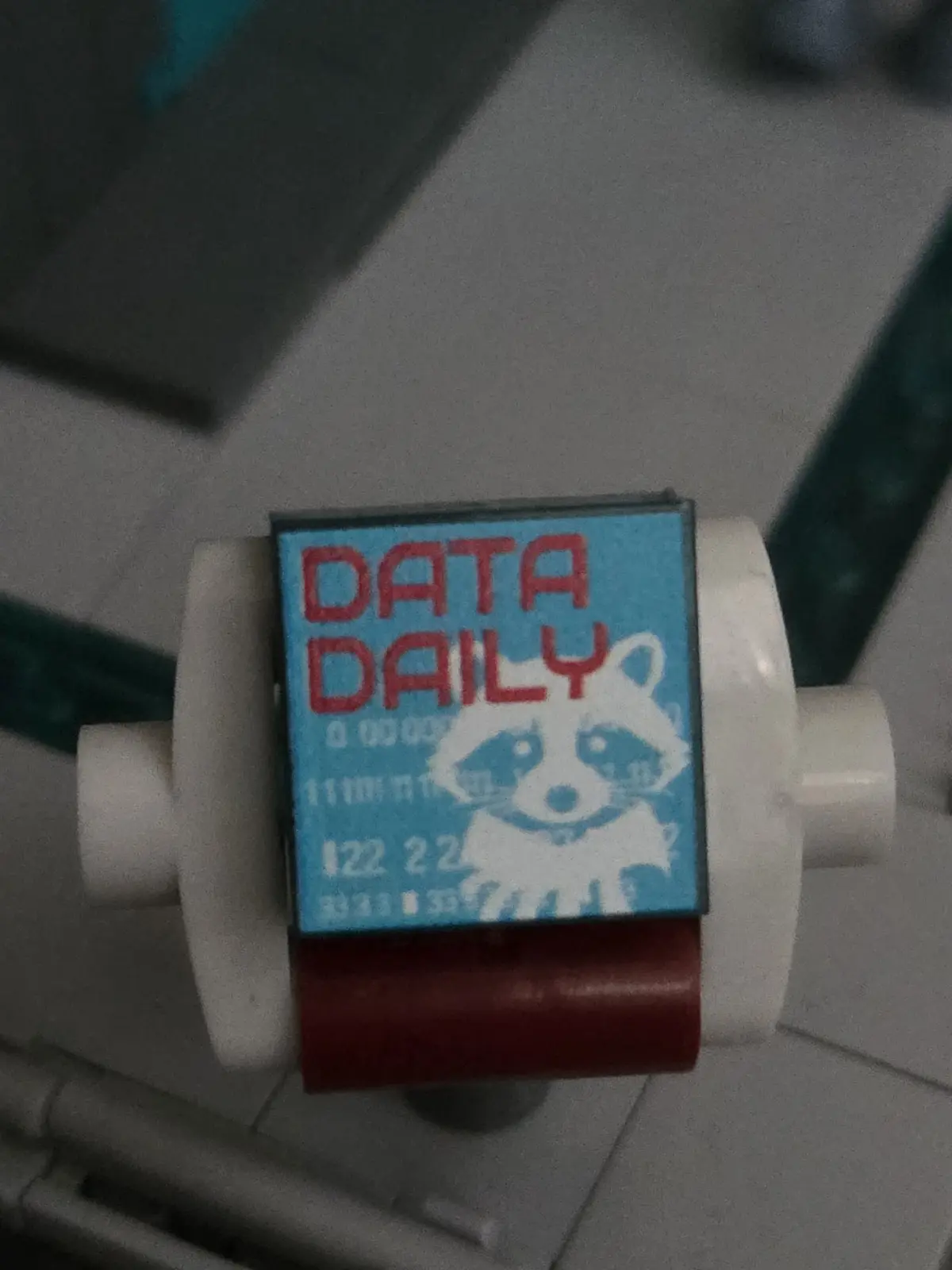
The set includes 40 printed parts and no stickers. The prints are well chosen rather than spread around simply to increase the number on the box. The red NEONCORP sign, CIVIC DATA CENTER entrance, DNA display, MIND MAP STATUS screen and DATA DRIVE panels all reinforce the building’s function.
The two illuminated acrylic panels add larger graphics without interrupting the shape of the tower. Combined with the prints and silver-coated pieces, they give the model a more premium finish and help pull the various rooms into the same corporate identity.
Characters and Storytelling
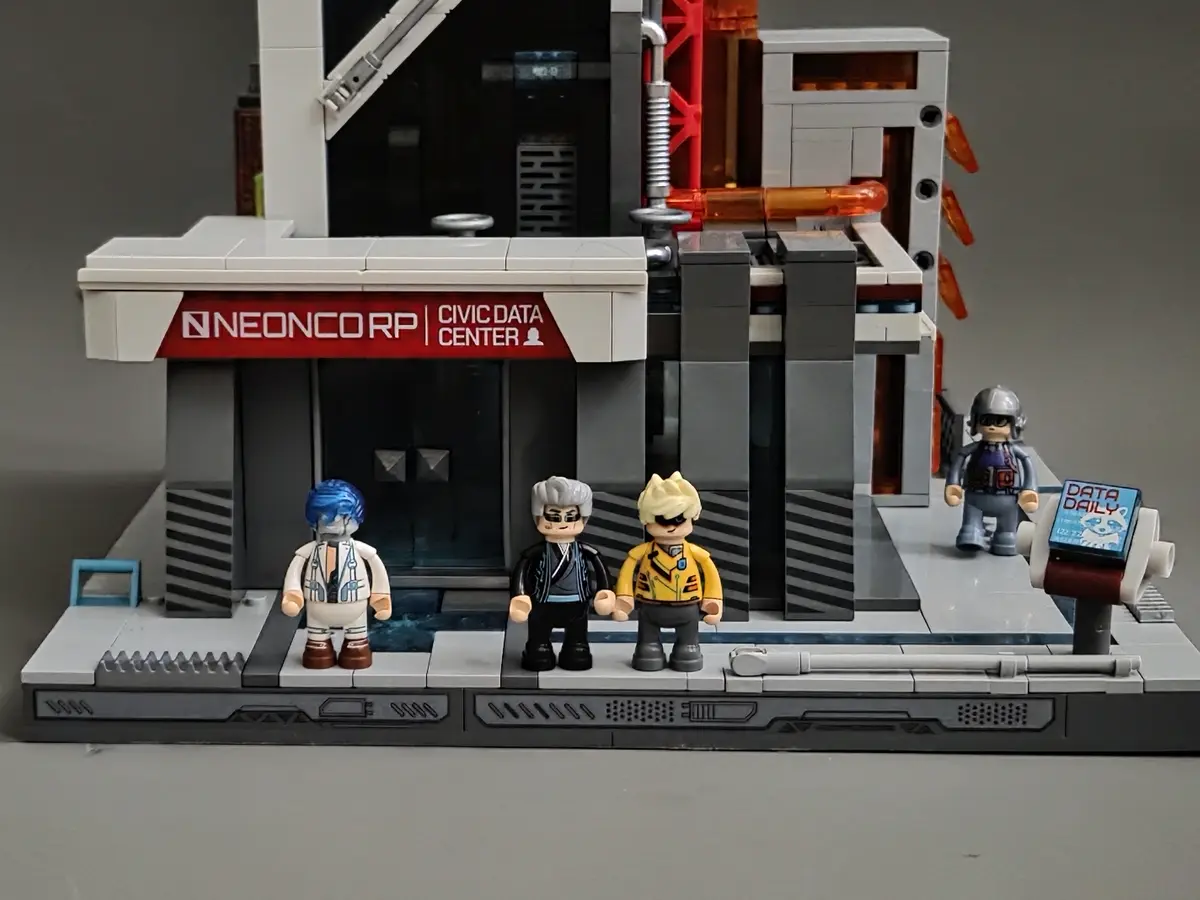
Five named characters are included. Elias Kade is Neon City’s corporate controller, Manson Holt maintains the systems, Argus analyses the city’s data, Violet is a citizen visiting the tower, and Nyx is the hacker trying to get inside the network.
That mix gives the building an immediate story. It is not just a group of employees standing beside some servers. There is an authority figure, technical staff, an ordinary citizen and someone actively trying to break into the system. The charging robot adds one more small display option around the entrance.
One Unresolved Cable Issue
The only real problem I encountered involved the transparent cable that appears to carry the light like fibre optic. It has to be threaded through bricks with holes, but mine was too thick to pass through. Trying to push it into place caused the end to fray.
I then noticed what looked like a thin film around the cable. Once I removed that outer layer, the cable fitted through the holes properly. What I cannot say with certainty is whether that film was supposed to be removed.
If it is a removable protective layer, the instructions need to make that clear. Lumibricks normally uses an obvious peel symbol when film should come off, but there was no indication here. If the layer is not meant to be removed, then the cable was manufactured too thick for the supplied elements. Either way, it caused a genuine build problem and needs to be addressed if the same material is used in future sets.
Price and Value
The Neon Tech Tower is officially listed at $149.99 USD. Regional pricing can vary, but the direct price is competitive for a 2,227-piece model with 27 integrated light points, 40 printed parts, two acrylic panels, five characters and a fully detailed interior.
This is not a simple shell built around a light kit. The reinforced base, removable rooms and exterior panels, manual elevator, large number of decorated elements and linked power system all contribute to the value. The official build estimate is around 16 hours, and that feels appropriate for the density and complexity involved.
The value will depend on whether you want the lighting and cyberpunk theme, because both are central to the design. If you do, this feels like a substantial display piece rather than an expensive collection of LEDs attached to a grey tower.
Verdict
The Lumibricks Neon Tech Tower feels like the Cyberpunk range growing up. The earlier buildings established the neon city, but this takes the architecture, interiors, structural design and lighting to a more mature level. It is also one of my favourite sets I have built this year.
The build is demanding, and the unresolved fibre-optic cable issue should have been handled better. This is a set that rewards patience, regular light testing and a clear building table. It is not the model I would choose for a relaxed evening with half my attention on a film.
Once finished, that frustration becomes small compared with what the set gets right. The sturdy base, detailed four-floor interior, flowing vertical light strip, layered power-core lighting and extensive printing all work together. It feels as though a lot of thought went into how the building is assembled, powered, accessed and displayed.
For me, this is very close to a perfect Cyberpunk set. The cable issue is the only meaningful flaw I encountered, and it is not enough to take the shine off the finished model. The Neon Tech Tower is highly recommended, especially if you already enjoy Lumibricks’ Cyberpunk range.
Lumibricks recently mapped out the different districts and future direction of Cyberpunk Neoncity. If this is the level of quality we can expect from that roadmap, I am fully on board.
Complex and rewarding, but it needs concentration and careful cable routing.
A mature, dense Cyberpunk tower with a strong corporate data-centre identity.
One of the best integrated lighting designs in the range, led by the glowing power core and travelling side effect.
Removable panels and room modules, wireless contacts and a reliable manual elevator make the tower practical as well as impressive.
A 47 cm centrepiece that becomes even stronger beside other Neoncity buildings.
A substantial package at $149.99, especially when the lighting, prints and interior are included.
Excellent
Where to Buy the Lumibricks Neon Tech Tower
Affiliate disclosure: The links below are affiliate links. If you buy through them, The Right Brick may receive a small commission at no extra cost to you. This does not affect the outcome of the review.
The Neon Tech Tower is available from the official Lumibricks store. The code THERIGHTBRICK may give 10% off eligible direct orders. Check the final checkout price before ordering.
Frequently Asked Questions
Is the Lumibricks Neon Tech Tower difficult to build?
It is an advanced build rather than a relaxing background activity. The dense tower structure and integrated wiring need close attention, particularly near the upper floors. Lumibricks suggests an average build time of around 16 hours.
How many lights are included?
The set has 27 LED light points and seven light strips. These include a travelling vertical effect, a warm central power core with selected pulsing sections, illuminated rooms and two acrylic light panels.
Does the Neon Tech Tower use stickers?
No. Lumibricks lists 40 printed parts, two acrylic light panels and nine silver-coated elements.
Can you access the interior?
Yes. Complete exterior panels lift away to expose the tower, while the individual rooms can be removed as wireless modules without trailing cables. The tower can also separate from its base.
Does it connect to the Neon Tech Station?
Yes. The set includes a detachable bridge connection for the Neon Tech Station 17010. Power contacts in the bases allow compatible buildings to share one power source, with support for up to four connected scene models.