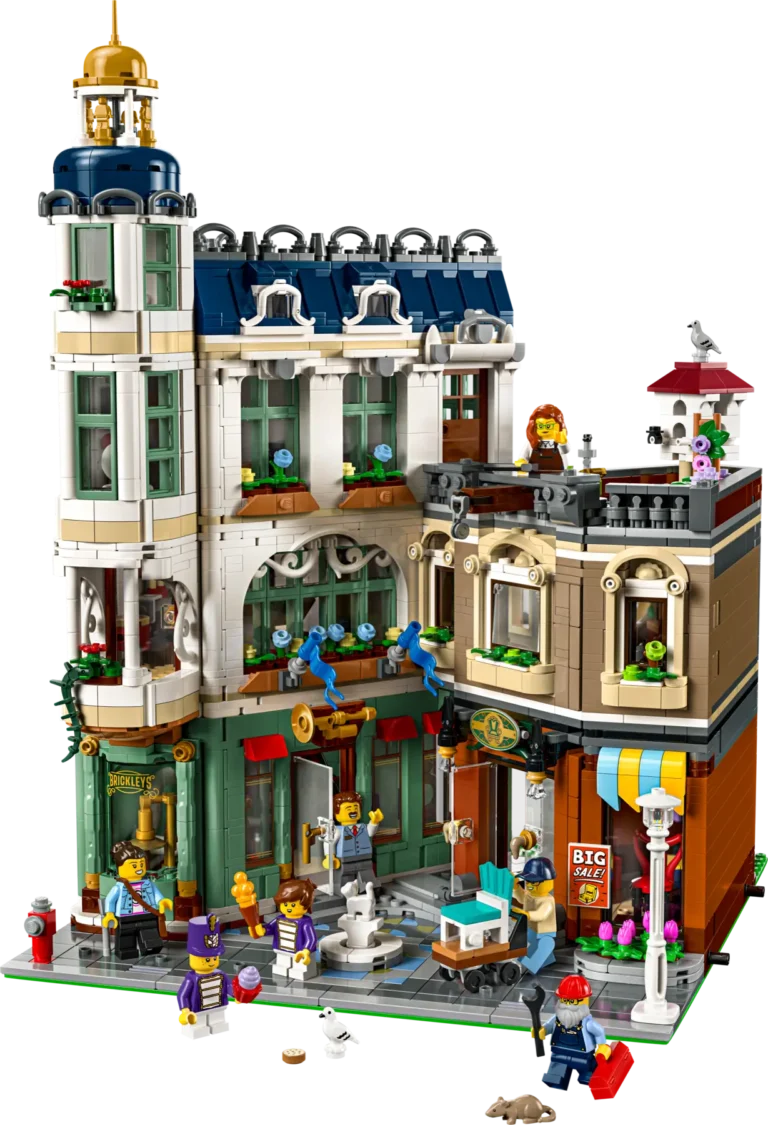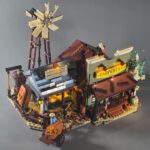

After building several sets from Lumibricks and Pantasy, some clear differences have started to stand out. Both brands are doing interesting things, but they are not chasing exactly the same kind of builder.

Brick Quality
Let’s get the obvious part out of the way first. Both Lumibricks and Pantasy use GoBricks, and it shows. Brick quality is excellent across the board, with strong clutch, consistent colours, and a feel that’s right up there with LEGO. There’s no meaningful difference here.
Lighting vs Motion
The biggest differentiator between the two brands right now is lighting.
Lumibricks integrate lighting into every set they release, and this is clearly their USP. It’s also something they’ve been very smart about. The lighting doesn’t feel like an optional add-on. It feels baked into the design from the very start.
I’ll be honest, I wasn’t a fan of lighting kits before this. I’d tried retrofitting lights into LEGO sets in the past and hated it. Pinched wires, half-dismantled builds, intimidating instructions. It always felt more stressful than rewarding.
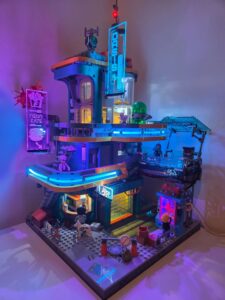
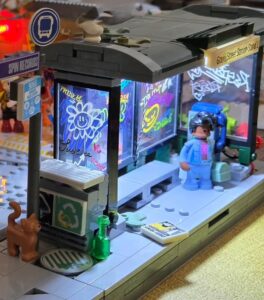
Lumibricks completely changed that for me. Designing the sets with lighting in mind removes almost all of that friction. Cable routing is planned, parts are designed to accommodate wires, and the whole process feels calm rather than fiddly. The result speaks for itself. The neon glow of the Cyberpunk range looks fantastic, while the warmer, more grounded lighting in the Town Life and Street Fusion sets suits those themes perfectly.
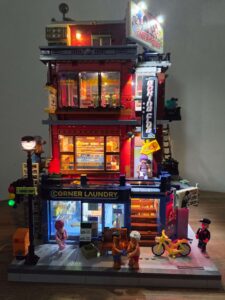
So far, Lumibricks have been consistently very good at this.
Pantasy, on the other hand, seem to have leaned into a different strength: movement.
From what I’ve seen, and especially from building the Craft Brewery, Pantasy put a lot of emphasis on mechanical features and Technic-driven motion. Turning one handle and watching an entire production line spring to life is genuinely satisfying. Much like lighting does for Lumibricks, these moving elements give Pantasy sets a sense of purpose and energy.
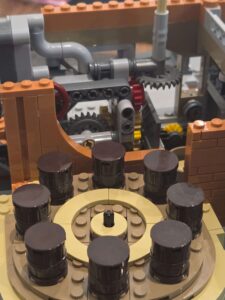
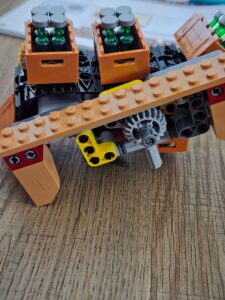
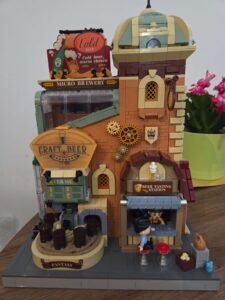
Looking at their wider range, this isn’t a one-off either. Cuckoo clocks, fairground machines, mining setups. Movement feels like a recurring design language for them, and when it works, it works really well.
It’s also worth noting that this gap may not stay as wide for long. Pantasy have recently talked openly about developing their own integrated lighting solutions for future sets, and even exploring add-on lighting kits for some existing builds. If they manage to bring lighting in at the design stage, rather than as an afterthought, it could significantly change how their sets feel on display. It’s something I’ll be keeping a close eye on, especially given how much integrated lighting has elevated Lumibricks’ builds for me.
Themes and Licences
Pantasy also lean heavily into licensed themes. Astro Boy, Snoopy, Popeye, Sherlock Holmes. These are distinctive, recognisable properties, but they are also a bit more niche. If you love those franchises, they’re incredibly appealing. If you don’t, they might pass you by.
Lumibricks have taken a different route. Modular buildings, medieval, space, cyberpunk. Themes that feel immediately familiar and comfortable to LEGO builders. People like cities. People like castles. People like space. It’s a smart, low-friction way to attract builders who are already invested in those styles.
That said, Pantasy’s retro-inspired sets, like the Walkman and other vintage tech builds, are clearly aimed at people of a certain age. I count myself firmly in that group.
Instructions
This is one area where I currently give Lumibricks the edge.
Their instructions are clear, well paced, and easy to follow. Pantasy’s Craft Brewery instructions weren’t bad, but they were noticeably denser. Too many steps per page, less precise part highlighting, and more concentration required overall.
I’ve ordered another Pantasy set, the Walkman, so I’ll be very curious to see if this has improved. For now, though, Lumibricks feel more relaxed to build with.
The Bigger Picture
Both brands are thriving at a time when LEGO pricing is pushing more builders to look elsewhere. You don’t have to spend long on social media to see people saying they’ve been priced out of the hobby.
That’s where companies like Lumibricks and Pantasy come in. More competition is good. It drives innovation, keeps prices in check, and gives builders real choice.
I genuinely think both brands have had a strong year and have firmly put themselves on the radar. If Lumibricks continue refining their lighting-first approach, and Pantasy successfully integrate lighting into their already impressive mechanical designs, the next year or two could be very interesting indeed.
I’m looking forward to building more from both and revisiting this comparison down the line with a much larger sample size.
Below isn’t a verdict or a winner-loser comparison. It’s simply a snapshot of where each brand seems to be focusing right now, based on what I’ve built so far.
Quick Comparison
| Feature | Lumibricks | Pantasy |
|---|---|---|
| Best For | Atmosphere & display | Motion & mechanical features |
| Brick Quality | GoBricks (excellent) | GoBricks (excellent) |
| Lighting | Fully integrated by default | Selective integration, expanding |
| Themes | Modular cities, sci-fi, fantasy | Licensed IPs, modulars, retro tech |
| Instructions | Clear, relaxed | Denser, more technical |