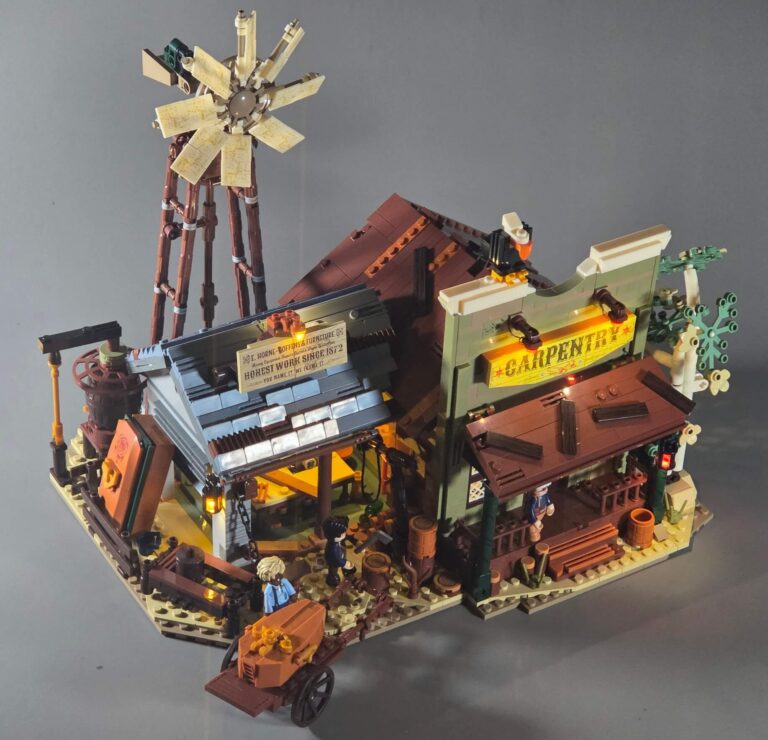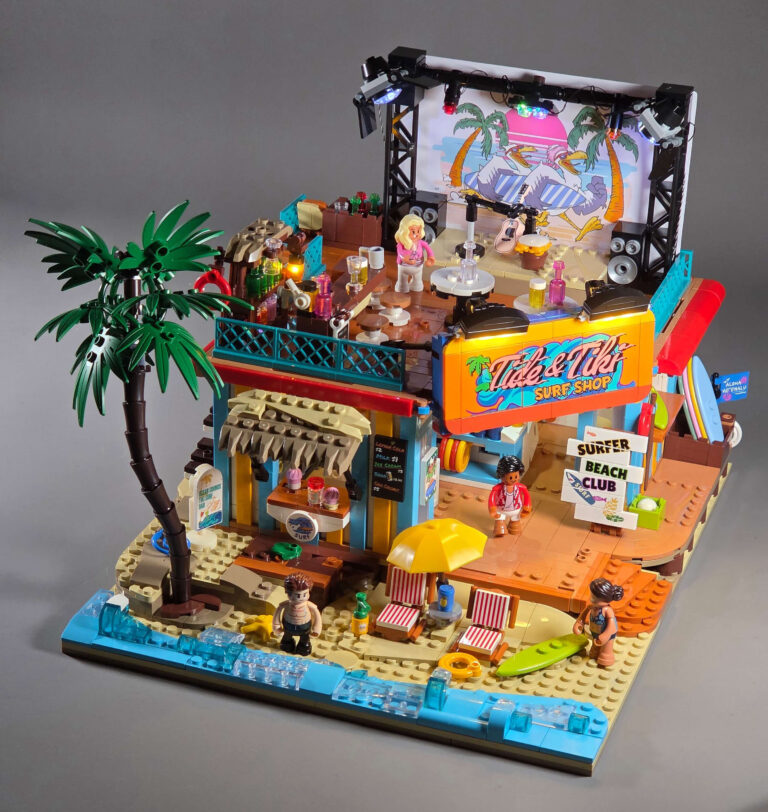


I’ve built over 15 Lumibricks sets at this point, ranging from small builds right up to the larger 3,000+ piece releases. After spending that much time with the brand, I’ve put together this Lumibricks review to highlight exactly what they do well, where they’re improving, and where they still fall short. This isn’t a sponsored take. It’s simply my experience so far.
Lumibricks Review: What Is the Brand?
Lumibricks is a Chinese building block brand that’s been around for over three years. From what I’ve been able to piece together, the company has close ties to Lightailing and Brixmax, both of which are well-known for producing lighting kits for LEGO sets.
The idea behind Lumibricks (originally Funwhole) seems to have been to take that lighting expertise and design sets where lighting isn’t an afterthought, but part of the build from the very beginning. Rather than building first and retrofitting lights later, the lighting is integrated directly into the design process.
The brand originally launched under the name Funwhole, but in early 2025 it was rebranded to Lumibricks. Honestly, this was a smart move. “Funwhole” doesn’t translate particularly well in Western markets and carries some unintended meanings in certain regions. Lumibricks, on the other hand, does exactly what it says on the tin. Whoever came up with the name deserves some credit.
For such a young company, they’ve grown quickly and built a reputation for strong set design and good quality, particularly with themes like steampunk, cyberpunk, and what has become one of my personal favourites, Street Fusion.
Brick Quality
Lumibricks uses GoBricks, which is a separate manufacturer known for producing very high-quality parts. GoBricks are often mentioned in the same breath as LEGO when it comes to quality, and in some cases I’d argue they’re even better.
The clutch power is slightly stronger than LEGO, which I personally see as a positive. Parts feel solid once connected, and I’ve had very few issues with loose elements or inconsistent tolerances. GoBricks also supplies parts to a number of other brick brands, so Lumibricks choosing them was a sensible decision.
From a pure brick quality perspective, Lumibricks is right up there with the best alternative brands.
Stickers vs Printed Parts
In the early days, Lumibricks (or Funwhole at the time) used a mixture of printed parts and stickers. From what I can tell, this was mainly in the first 30 or so sets.
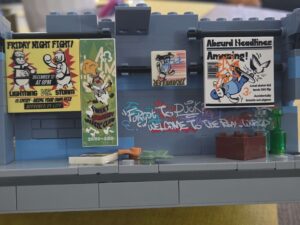
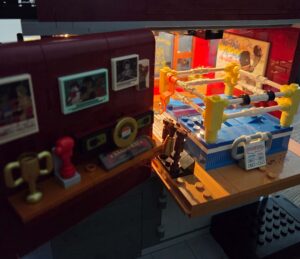
Thankfully, they moved to a fully printed-parts approach fairly early on, and from a builder’s point of view, this was a great decision. The print quality is excellent, and they use a lot of printed elements. Some sets include well over 90 printed parts, such as the Boxing Club, and the added detail really elevates the final build.
Not having to deal with stickers, lining them up, or trying to apply them around awkward lighting elements makes the whole experience far more enjoyable.

Set Design and Innovation
One thing I’ve consistently noticed is that Lumibricks sets just keep getting better. They experiment, they try new ideas, and they’re clearly not afraid to rethink how things are usually done.
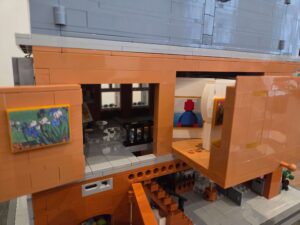
A good example of this is how they handle accessibility and modularity. Instead of forcing you to remove entire floors to see the interior, many sets include small hinged wall panels, sliding room modules, or removable sections that let you access specific areas without dismantling half the building.
Some rooms can slide completely out of the structure, allowing you to interact with them independently before sliding them back in. Other sets, like the Toy Store, allow the entire front to lift away, giving instant access to every room at once.
These might sound like small touches, but they make a big difference to how enjoyable the sets are to build and display. It’s clear they’re actively thinking about how people actually interact with their models.
It’s genuinely refreshing to see a brand produce innovative sets that feel like they’ve actually been designed by people who care about the building experience.
In my opinion, LEGO has drifted away from this recently. These days, a lot of their output feels like it’s driven more by spreadsheets and margins than by creativity or the builder experience. That’s obviously a simplification, but it’s hard not to feel that way sometimes when you compare the two side-by-side.
Listening (and Learning) from the Community
One thing that really sets Lumibricks apart from the bigger brands is how they treat their customers. They actually listen.
They regularly send out surveys to the community asking for opinions on sets currently in development. I’ve seen them ask about specific themes, design preferences, and even price points. More importantly, they have actually changed designs based on that feedback. It’s a refreshing approach that makes you feel like you have a genuine say in the products they release. This feels completely absent when dealing with LEGO.
When Experiments Go Wrong Of course, they don’t always hit the mark. A famous example was the Alpine Observatory set. The “galaxy projection” feature in the final model wasn’t nearly as bright or clear as the promotional renders suggested, and the community was vocal about their disappointment.
To their credit, Lumibricks didn’t hide from it. They openly apologised for the discrepancy, admitted their marketing was misleading, and promised to tighten up their testing process. Companies make mistakes, and that is part of the learning process. The important thing is that they owned it. That level of transparency goes a long way in building trust.
Lighting Integration (Their USP)
Lighting is really where Lumibricks stands apart.
I’ll be honest, when I was primarily building LEGO, lighting was something I rarely bothered with. Retrofitting lights usually meant partially disassembling a finished build, pinching wires, and hoping nothing snapped or got trapped. The end result often looked great, but the process was stressful enough that I eventually stopped doing it altogether.
Lumibricks completely changes that experience.
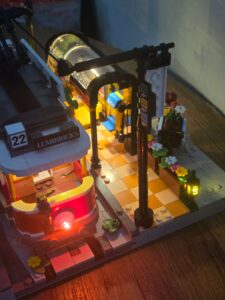
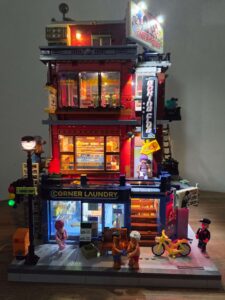
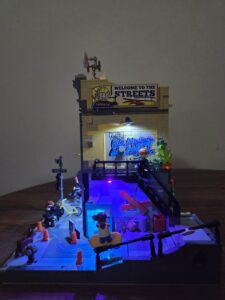
Because the lighting is designed into the set from the start, the build process feels far more relaxed. Cable routing is planned, not improvised. They even produce their own specialised parts to help guide wires through walls, floors, and tight spaces without issue.
The result is lighting that feels natural, not forced, and a build experience that’s far less frustrating than traditional aftermarket lighting kits. It adds a huge amount of character and brings the sets to life in a way static models simply can’t.
Value for Money
When Funwhole first launched, the sets were extremely good value. You were getting solid builds with integrated lighting at prices that felt almost too good.
As the brand has grown, prices have gradually increased, and more recently there was a noticeable jump of around 20% or more across much of the range in Europe. That said, even at current prices, Lumibricks still offers better value than LEGO in most cases, especially when you factor in the included lighting.
On top of that, discounts are almost always available. Between regular promotions on the official site and frequent deals on Amazon, it’s rare that you actually pay full price for a Lumibricks set.
For what you get, the value proposition is still very strong.
Instructions
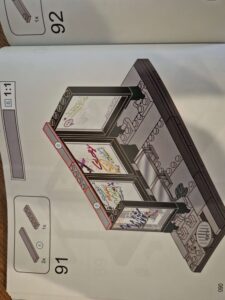
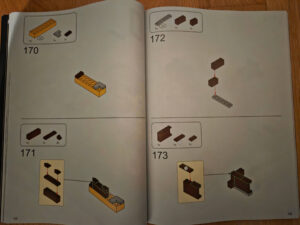
The instructions are genuinely very good. One thing I really like is how much effort they’ve clearly put into clarity. Most pages only have one, maybe two steps on them, which makes everything easy to follow and reduces mistakes.
This is especially noticeable when it comes to the lighting. Quite often you’ll get two or three pages covering the same lighting step, but shown from different angles. It might seem excessive at first, but it really helps make sure you’ve routed cables correctly and haven’t missed anything before moving on.
There is one slightly odd thing worth mentioning. At the beginning of the instructions, they sometimes include a colour key that says something like “this colour represents this part in the instructions”. I’m not entirely sure why this is needed. If they can print the colour correctly, why not just use it consistently throughout? It’s a bit bizarre.
That said, once you’ve read the key, it’s fine. I’ve seen other builders mention confusion between similar colours in some sets, especially different shades of grey or brown. Personally, I haven’t had that issue, but I always build with a bright reading light aimed at the instructions, so that probably helps. Overall, I’ve been very impressed with the instruction quality.
Build Experience
The build experience has also been very good overall. I’ve enjoyed pretty much every Lumibricks set I’ve built so far.
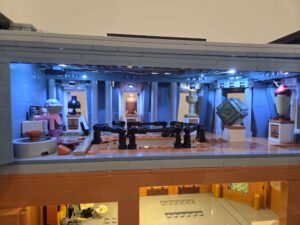
One area where they really excel is interior detailing. There is so much attention to detail inside these buildings. I was never really a fan of interiors when I was building LEGO, mainly because once a set was finished, you rarely got to see them again. They just weren’t very accessible.
Lumibricks seem to have properly figured that out. Because of the way they design accessibility and lighting, you don’t even need to remove floors or open doors to appreciate the interiors. With the lights on, you can see everything inside, which has completely changed how I feel about interior builds.
That said, I do think it’s worth noting that the building techniques themselves are generally simpler than LEGO. With some LEGO sets, you’re building subassemblies that make no sense at the time, only to later slot them into place and suddenly realise how clever the design is. I don’t get that feeling as often with Lumibricks.
This will be a negative for some builders, especially those who love complex, clever techniques. LEGO still has a big advantage here. However, I will say that some of the Cyberpunk sets did give me that “wow” moment in places. Those have been the most complex builds I’ve done from Lumibricks so far.
Who Are These Sets Aimed At?
For me, Lumibricks sets are primarily aimed at adults and teenagers.
While lighting is their biggest strength, it does raise the difficulty level. I don’t think many children under the age of 12 are going to get through these builds solo without accidentally damaging wires or getting frustrated.
Even as an adult, I have to be careful. The wires are thin and can break if you’re not paying attention. I’ve seen this firsthand with my 9-year-old daughter. She loves the look of the sets but needed quite a lot of help from me during the wiring sections.
That said, for a 12+ builder or a teenager who enjoys technical challenges, these are fantastic. Just be aware that if you are buying this for a younger child, it is going to be a ‘collaborative’ build where you may need to handle the lights.
I’d love to see Lumibricks innovate further here and find ways to make the lighting more robust. I’m not sure how easy that is, but as things stand, I wouldn’t really recommend these sets for younger kids.
Themes: Where Lumibricks Really Shines
Themes are where Lumibricks has absolutely nailed it. They’ve clearly tapped into nostalgia and themes that resonate strongly with adult builders.
Medieval
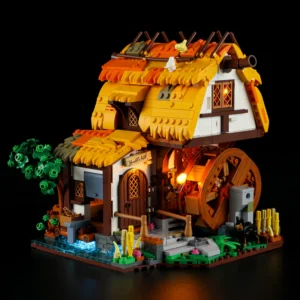
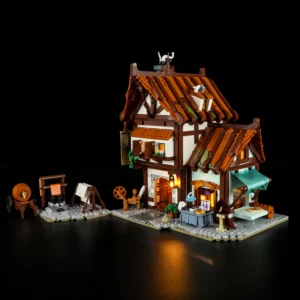
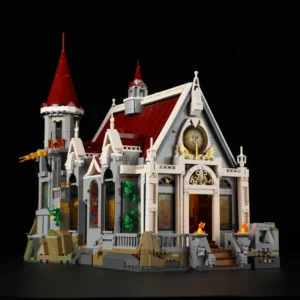
The Medieval range is excellent. There’s a huge audience for castle and medieval-themed builds, and it’s something LEGO doesn’t cater for particularly well these days. Lumibricks’ Medieval sets all look great and feel cohesive as a collection.
Street Fusion
Street Fusion is one of the standout themes for me. The graffiti, the 90s nostalgia, the overall vibe, it’s all really well done. Sets like the Record Store, Skate Shop, and more recently the Boxing Club are some of my favourites from the entire range. They absolutely nailed this theme.
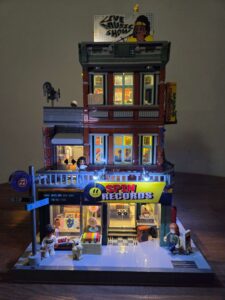
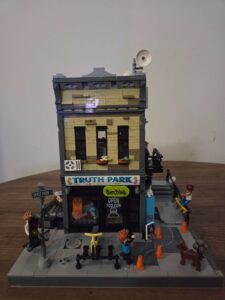
Old West
Another theme I love. I own almost every Old West set so far, with the exception of the bank, and there’s a new Old West Inn on the way that looks very promising.
These sets do a fantastic job of setting the scene. The detailing is spot on, the interiors are well thought out, and the lighting fits the time period perfectly.
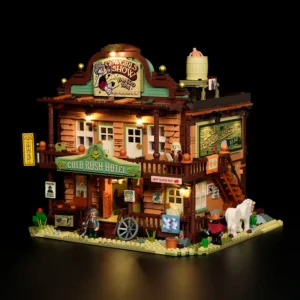
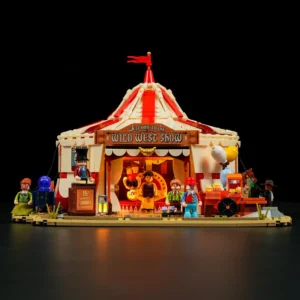

Steampunk and Cyberpunk
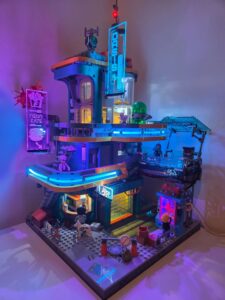
These two themes are actually what led me to discover Funwhole and Lumibricks in the first place. LEGO wasn’t really doing anything in these areas, and I’ve always loved steampunk and cyberpunk worlds in films and animation. Arcane, for example, is incredible and well worth watching.
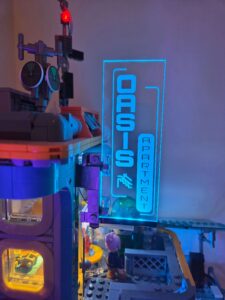
I originally went looking for inspiration for my own build ideas and stumbled across the steampunk range and the Cyberpunk Apartment. That apartment ended up being my first Lumibricks set, and it was an amazing introduction to the brand.
Farm, Road Trip, and Wilderness Builds
They also cover farming, road trip, and outdoor cabin-style sets, and they’ve been very smart in choosing themes that people already love. These aren’t random ideas. They’re clearly chosen because they appeal to a wide adult audience, and that’s a big reason why Lumibricks has been successful so far.
The Minifigures: An Acquired Taste?
Let’s address the elephant in the room: the minifigures.
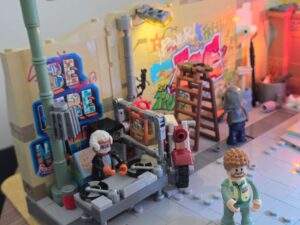
I’ll be honest. Initially, I hated them. They looked odd, the proportions felt wrong, and they just weren’t what I was used to. But after building so many sets, a strange thing happened. They started to grow on me.
It got me thinking that LEGO minifigures are actually pretty weird too. We’re just so used to them that their blocky, disproportionate shape has become the “norm” in our heads. If you look at them objectively, they are strange little things. Since realising that, I’ve warmed up to the Lumibricks figures. They have their own charm once you stop expecting them to be LEGO clones.
However, there are genuine design flaws.
First, the assembly can be a nightmare. You often have to assemble the arms and hands yourself, and the connections are incredibly tight. In my early builds, I snapped a few arms trying to force them in. I’ve got the knack for it now, but frankly, this shouldn’t happen. It would be much better if they came pre-assembled or if the tolerance was tweaked slightly.
The “Sitting” Problem My biggest gripe, though, is that they cannot sit down securely on studs.
Likely to avoid infringing on LEGO’s 3D trademarks (which protect the specific shape and function of the LEGO minifigure legs), Lumibricks uses a different leg design. The downside is that they don’t have the standard “tubes” in the back of the legs to lock onto studs while seated.
Lumibricks tries to get around this with clever workarounds, like putting studs on the side of a table so the figure’s feet can clip in while they sit, but it’s not ideal. It means you have no freedom to just sit a figure on a bench or a chair unless that specific spot has been engineered for it. If you try, they just slide off. It’s a frustration that breaks the immersion of an otherwise excellent display piece.


Availability and Regional Stock
Availability has been a mixed experience for me.
I initially wanted to buy directly from the official site to take advantage of their rewards programme, but stock in the UK was often poor. New releases were regularly unavailable, while the US store always seemed well stocked. This has improved over the last couple of months, but it was frustrating early on.
These days, I mostly buy from Amazon. There are frequent discounts and voucher deals, and I often find sets for significantly less than the official price.
The US appears to be their strongest and most consistently stocked market. Europe is generally decent too, with Germany seeming to be a particularly strong region, which makes sense given how popular alternative brick brands are there. Australia, on the other hand, seems to struggle, and I’ve seen plenty of complaints about stock availability.
Lumibricks clearly still has some logistical issues to work through. Growing this quickly can’t be easy, but if they want to keep customers happy, they really need to make sure new releases are available across all regions at launch. Otherwise, it just leads to disappointment.
Final Verdict: Should You Try Lumibricks?
For me, the answer is a clear yes.
If you don’t, I think you’re genuinely missing out. A lot of builders come from LEGO and still carry that old stigma around Chinese brands, where anything non-LEGO gets lumped in as a knock-off. That perception just doesn’t hold up anymore.
Brands like Lumibricks aren’t copying LEGO sets. They’re designing their own, with their own designers, their own themes, and their own ideas. And in many cases, they’re covering ground that LEGO simply isn’t touching.
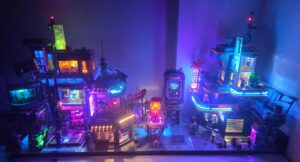
One of the things that surprised me most is how well Lumibricks integrates with LEGO. I run a LEGO city layout, and my Lumibricks modulars slot straight in alongside it without looking out of place. Scale-wise, they work. Visually, they work. And once the lights are on, they often end up drawing more attention than the surrounding LEGO buildings.
Beyond that, Lumibricks gives you access to themes and styles that just aren’t available elsewhere, whether that’s Old West, Street Fusion, or Cyberpunk. If you enjoy building and displaying sets, it makes very little sense to limit yourself to a single brand.
Trying other brick companies doesn’t mean abandoning LEGO. It just means expanding what’s possible on your shelf / City.
Lumibricks: The Quick Verdict
| Pros | Cons |
|---|---|
| Lighting Baked In: Wires are hidden and the final effect is genuinely stunning. | Simpler Techniques: Builds are satisfying, but lack the complex geometry of top-tier LEGO sets. |
| They Actually Listen: Regular surveys and design changes based on real community feedback. | Stock Issues: New releases can be hard to find in some regions. |
| GoBricks Quality: Uses the best alt-bricks on the market. Clutch is premium. | Minifig Flaws: The figures are fiddly to assemble and, frustratingly, cannot lock onto studs when sitting down. |
| No Stickers!: Almost every decorated part is printed. A massive win. | Not for Young Kids: The intricate lighting steps can be too difficult for them to tackle without help. |
| Adult Themes: Cyberpunk, Steampunk, and Grimey Streets – themes LEGO won’t touch. | |
| Transparency: They own their mistakes (like the Observatory issue) instead of hiding. |
If you enjoy building and displaying sets, you are genuinely missing out if you skip Lumibricks. The lighting changes the game, and the company attitude is refreshing.